London Metropolitan University Jobs: Where to Find Them and How to Apply
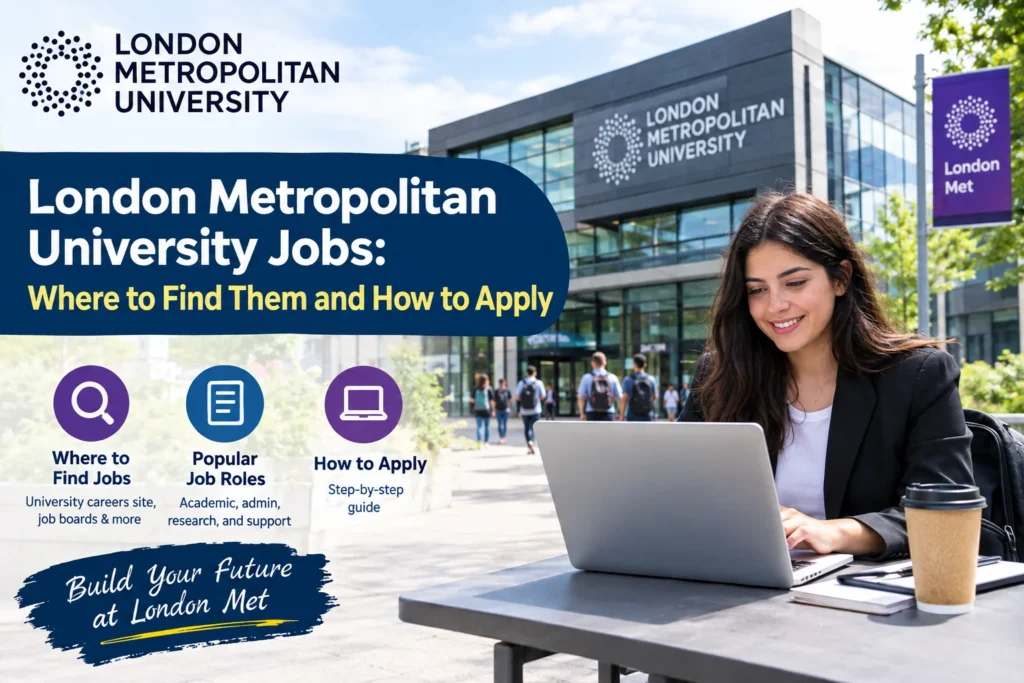
Looking for a job at London Metropolitan University? Whether you want a lecturing post, a professional services role, or a part-time job while you study, there’s more than one route in, and it helps to know which one fits your situation before you start applying.
London Met, based on the Holloway Road campus in Islington, north London, employs staff across teaching, research, technical support, administration, and estates. It also runs a separate service that helps its own students find part-time and graduate work. These are two different systems, and mixing them up is the most common reason people waste time searching in the wrong place.
Staff Jobs at London Met
If you’re applying to work for the university, not as a student but as an employee, the official route is the university’s own careers page at londonmet.ac.uk, which lists current vacancies and links through to its application portal. Roles are grouped into a few broad categories:
- Research and teaching: Lecturers, senior lecturers, researchers, and academic leadership posts
- Professional services: Administration, student support, marketing, IT, HR, and finance
- Technical support: Lab technicians, IT and AV specialists, library staff
- Estates and facilities: Maintenance, security, and campus operations
Salaries vary widely by role and seniority. Recent listings on jobs.ac.uk (a specialist higher education jobs board that regularly carries London Met vacancies) have ranged from around £38,000 for entry-level academic posts up to over £100,000 for senior leadership positions, most figures including the London allowance. Many roles are advertised as hybrid, so it’s worth checking the working pattern on each listing rather than assuming full-time on-campus attendance.
If you have questions before applying, London Met’s HR Recruitment Team handles staff hiring queries directly, and the university’s “information for applicants” page walks through what to expect at each stage, from application through to interview.
Where to check listings:
- The university’s own jobs page (londonmet.ac.uk)
- jobs.ac.uk, which specializes in higher education and research roles
- General job boards like Totaljobs, which also mirror current openings
Student and Graduate Jobs
If you’re already a London Met student, the university runs a separate careers and employability service through its Student Zone, aimed at part-time work, internships, placements, and graduate roles rather than permanent staff positions.
The main tool here is MyCareer, the university’s job search platform for students. Log in to browse part-time roles, volunteering opportunities, and graduate vacancies, and to book appointments with the Graduate Success Teams. There’s also a Careers Portal with a CV builder, a tool called CV360 that gives instant feedback on an uploaded CV, an interview simulator, and psychometric test practice.
One option worth knowing about specifically: Met Temps, the university’s in-house temping agency. It’s aimed at students who want paid, flexible work on campus, usually shorter shifts that fit around a timetable, rather than a fixed weekly commitment.
The Graduate Success Teams also run part-time jobs fairs, volunteering fairs, and employer “pop-up” events through the year, plus a termly newsletter with relevant openings. If accessing MyCareer causes problems, the careers team takes queries by email and can usually sort access issues quickly.
Which Route Should You Use?
It comes down to one question: are you applying as a member of the public or existing professional, or as a current London Met student?
- Applying from outside the university → use the official staff jobs page or jobs.ac.uk
- Currently studying at London Met and want part-time or graduate work → use MyCareer and the Careers Portal
- Want short, flexible paid shifts on campus → register with Met Temps
Trying to apply for a staff vacancy through the student portal, or vice versa, won’t work. The two systems don’t overlap.
A Few Things to Know Before You Apply
Academic and professional services roles at London Met often move through a formal panel interview process, sometimes with a presentation or task included, particularly for teaching posts. Build in time for this rather than assuming a single interview will cover it.
For hybrid roles, it’s worth confirming what “hybrid” actually means for that specific team. It can range from one office day a week to a near-even split, and this isn’t always spelled out in the initial listing.
If you’re applying as a student for part-time work, priority sometimes goes to those who’ve completed a CV review or attended a careers workshop first. It’s not a hard requirement, but it can improve how competitive your application looks, especially for popular graduate schemes.