
VanEck Quantum Computing ETF: Is It Worth Owning in 2026?
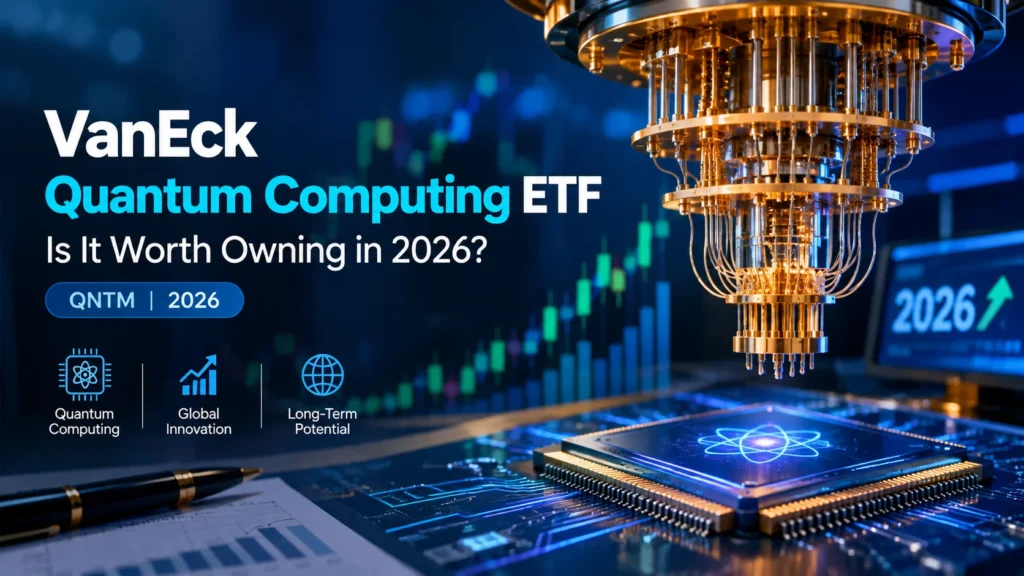
Quantum computing makes for great headlines. Owning it is another matter. Most pure-play stocks in the field earn little revenue, swing wildly, and often raise cash by issuing new shares. A fund spreads that bet around, which helps explain why the VanEck Quantum Computing ETF now holds roughly $896 million in assets as of 29 September 2026.
This guide covers what the ETF holds, how it picks stocks, what it costs, and where it can hurt you. It also clears up a ticker mix-up that trips up many searchers. Nothing here is personal financial advice.
What Is the VanEck Quantum Computing ETF?
It’s a UCITS fund, which means it follows European regulations and is aimed mainly at investors in Europe and the UK. VanEck launched it in May 2025 as Europe’s first quantum computing ETF, listed on Deutsche Börse and the London Stock Exchange. It copies the MarketVector Global Quantum Leaders index, which holds about 30 companies, and the annual fee (TER) is 0.55%.
| Detail | QNTM |
|---|---|
| Issuer | VanEck |
| ISIN | IE0007Y8Y157 |
| Ticker | QNTM (VanEck’s code); QUTM on Xetra |
| Domicile | Ireland |
| Annual fee | 0.55% |
| Income | Accumulating (no payouts) |
| Sustainability class | SFDR Article 6 |
Euro-based investors can trade it on Xetra under QUTM, and it reinvests income rather than paying dividends. Ticker codes vary by exchange, so confirm the listing with your broker using the ISIN.
QNTM vs QTUM: Two Different Funds
Search this topic and you’ll see QTUM everywhere. That ticker isn’t VanEck’s. QTUM is the Defiance Quantum ETF, listed on NASDAQ, which began trading in 2018, charges 0.40%, and tracks a BlueStar index. It’s also far larger, with around $5.56 billion in net assets. Defiance says it covers 71 stocks and reaches into AI and other technologies, not only quantum.
Which one suits you? It depends on where you live and how pure you want the exposure. Here’s the short version:
| VanEck QNTM | Defiance QTUM | |
|---|---|---|
| Listing | London, Frankfurt | NASDAQ |
| Fee | 0.55% | 0.40% |
| Focus | Quantum revenue and patents | Quantum plus machine learning |
| Size | ~$896M | ~$5.5B |
A third option exists in the US: the WisdomTree Quantum Computing ETF (WQTM), which charges 0.45% and uses its own selection system. US-based readers should know that UCITS products are often restricted at American brokerages, so ask yours before assuming you can buy QNTM.
What’s Inside and How Stocks Get In
The index builds in layers, and the rules explain a lot about how the portfolio behaves. It starts with up to 15 of the largest companies that earn at least 50% of revenue or activity from quantum computing (25% for existing members). Patent data from EconSight helps identify other leaders. No single company can exceed 8% of the index, or 4% if it falls below the revenue thresholds, and at least 20% must sit in the true quantum specialists. There are liquidity filters too, including a $150 million minimum market value.
So who actually shows up? Specialists like IonQ, Rigetti, and D-Wave sit alongside giants with quantum research programs, such as IBM, Alphabet, and Honeywell. The specialists get extra weight so big tech doesn’t dilute the theme.
That weighting shifts. In VanEck’s monthly factsheets, D-Wave and Rigetti have appeared among the top positions, with single holdings anywhere from about 4% to nearly 10%. Holdings change often, so check VanEck’s page before you buy.
Performance: Strong, but bumpy
Numbers tell the story better than adjectives. VanEck’s fact sheet for the period ending 30 June 2026 showed a 9.07% drop over one month, a 36.33% gain over three months, and a 22.21% gain year to date. By late September, the year-to-date return stood near 17%.
Read that again. One month lost nearly a tenth of the value right after a quarter that gained more than a third. That’s normal for this theme, not a glitch.
There’s a catch, too. The ETF only started in May 2025, so there’s barely a year and a half of history. Can you judge a strategy on that? Not really. Treat the returns as a snapshot of mood, not proof of skill.
The Risks Worth Weighing
The technology is early. VanEck’s own page says commercial success remains uncertain and that financial exposure may reach beyond pure-play quantum companies. Many holdings burn cash, and share issuance can erode what a correct thesis delivers.
Concentration. VanEck’s documents warn that assets may be concentrated in specific sectors or industries. Thirty stocks in one theme can fall together.
Currency. The base currency is the US dollar, so euro and sterling holders absorb exchange-rate moves on top of market moves.
Overlap. If you already own a global index fund, the big-tech slice duplicates part of what you hold. You’re paying 0.55% mostly for the specialists.
Cost. Broad index funds charge a fraction of that fee. Over a decade, the gap adds up.
Who Might Consider It
Honestly, this ETF suits a narrow group. Think of a long horizon, spare money, and a stomach for sharp drops. Many writers on thematic funds suggest keeping such bets to a small slice of a portfolio, though no rule fits everyone. I can’t tell you when quantum computing turns profitable, and nobody else can either.
If broad diversification is the goal, a world index does more of the work. If you want quantum exposure in the US, QTUM or WQTM are the realistic routes. And if you need the money within a few years, skip thematic funds altogether.
FAQ: VanEck Quantum Computing ETF
Is the VanEck Quantum Computing ETF the same as QTUM?
No. QTUM is Defiance’s US-listed fund. VanEck’s product trades as QNTM, with other codes on some exchanges.
What does it cost?
The total expense ratio is 0.55% per year.
How many companies does it hold?
About 30, mixing quantum specialists with large technology groups.
Does it pay dividends?
No. It’s an accumulating fund that reinvests income.
Can US investors buy it?
Often not through standard brokerages, because of rules around European-domiciled funds. Confirm with your broker.
Is it a good investment?
That depends on your goals, timeline, and tolerance for swings. It’s a high-risk, early-stage theme.


1 thought on “VanEck Quantum Computing ETF: Is It Worth Owning in 2026?”