SoFi Stock Price Today: What’s Behind the Move
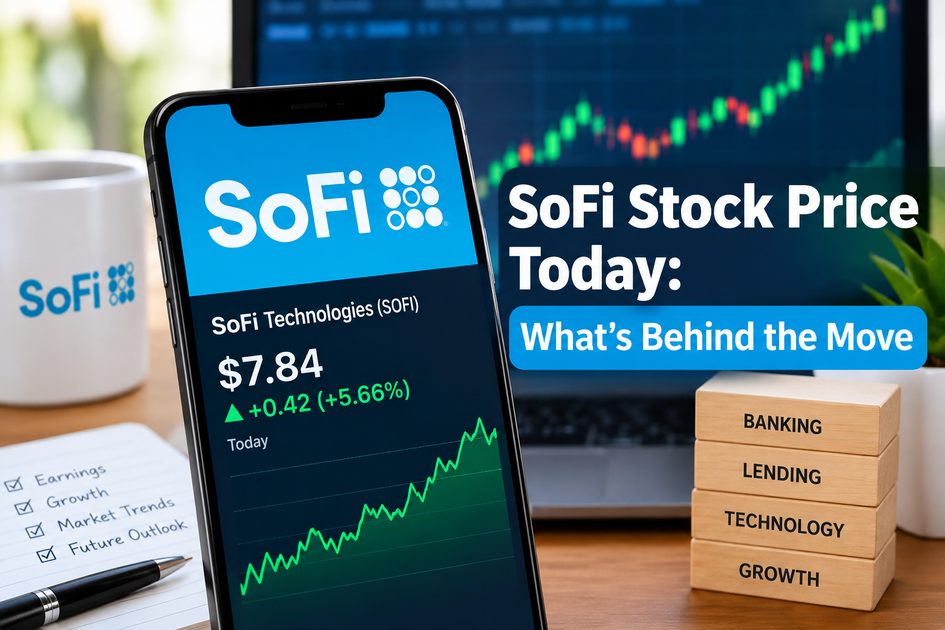
SoFi Technologies (NASDAQ: SOFI) is trading around $17-$17.50 as of late September 2026, with a market cap near $22 billion. That’s a big comedown from the stock’s 52-week high of $32.73, and it puts SOFI roughly 30-40% below where it started the year, even as the broader market has climbed.
So what’s going on? The short version: SoFi’s underlying business is growing fast, but investors are worried about the price they’re paying for that growth, plus some fresh concerns about loan quality.
The Bull Case: A Business That’s Actually Changing Shape
SoFi isn’t just a lender anymore. Over the past year it has rolled out SoFiUSD, a bank-issued stablecoin, and struck a deal with Mastercard to use it for 24/7 payment settlement across Mastercard’s network, which currently only settles five days a week. SoFi already processes around 8 billion transactions a year through its Galileo payments platform, and management wants more of that volume moving over stablecoin rails.
That partnership news gave shares a real jolt. SOFI jumped nearly 5% on the stablecoin settlement launch with Mastercard, and the company also launched a new business banking platform this fall to go after a market it hadn’t seriously touched before. Add in cross-selling across SoFi’s roughly 16-million-member base, and you get a bull case built less on “SoFi the lender” and more on “SoFi the financial infrastructure company.”
The Bear Case: Growth Isn’t the Only Question
The pushback is straightforward. SoFi’s technology-platform revenue has taken a hit after losing a major client, and rising credit charge-offs have made some analysts nervous about how the loan book performs if the economy weakens. That’s part of why Barclays recently cut its price target on the stock, lowering it to $18 from $28 while keeping an Equal Weight rating.
There’s also a valuation argument: at a trailing P/E in the high 30s to 40s, SoFi trades at a premium that assumes a lot of future growth actually shows up. If loan originations slow or defaults rise, that multiple gets harder to justify.
What Analysts Are Saying Right Now
Wall Street is genuinely split. Nine analysts currently recommend buying SOFI, while four suggest selling, landing on an overall neutral rating. The average 12-month price target sits around $20.34, with estimates ranging from a low of $12 to a high of $30—a wide spread that reflects just how differently people read the same numbers.
Some longer-horizon models are more optimistic. One valuation model projects the fair value closer to $27 based on expected 2028 revenue and earnings growth, while a separate 2030 scenario puts a bull case near $48 a share if the stablecoin business scales the way management hopes.
The Bottom Line
SOFI’s price action in 2026 comes down to a tug-of-war: a lending business facing credit-quality questions versus a fast-growing set of new revenue lines (stablecoin settlement, business banking, and cross-selling) that didn’t exist a year ago. Whether the stock reflects a struggling consumer lender or an emerging fintech infrastructure company is the real debate driving the swings between roughly $15 and $19 that shares have been stuck in for weeks.
Note: I’m not a financial advisor, and this isn’t investment advice—it’s a summary of what’s publicly known and what analysts are saying. Stock prices and estimates change constantly, so check a live quote before acting on any of this.