What Is Uncuymaza? Why This Trending Word Has No Real Definition
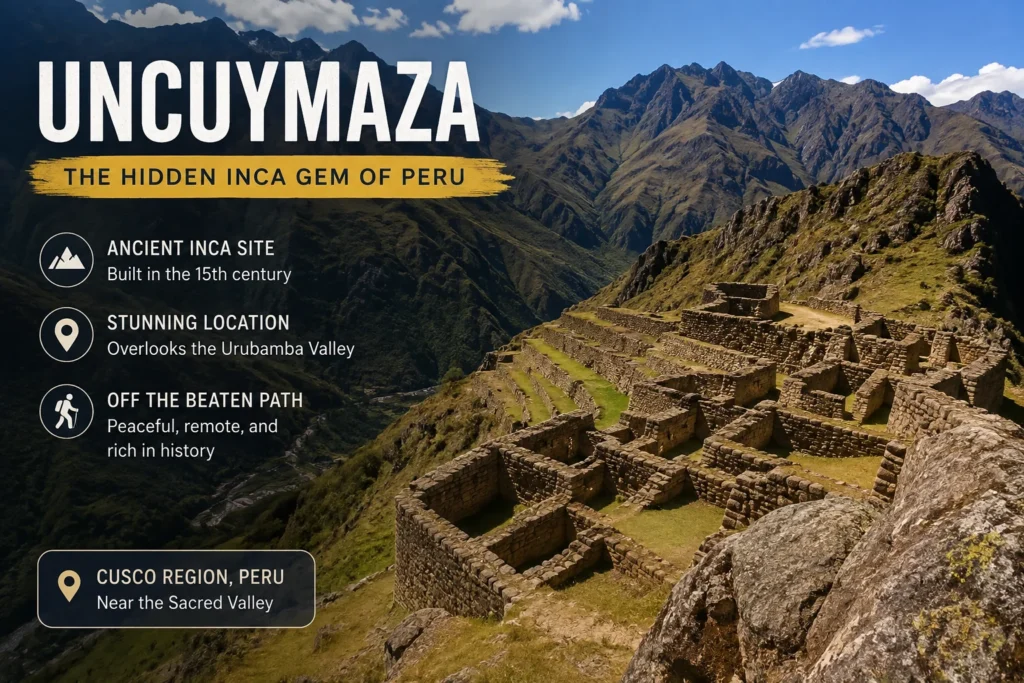
If you’ve searched “Uncuymaza” and come away more confused than when you started, you’re not alone. Type the word into Google, and you’ll find it described as an Andean philosophical concept, a hidden village in Peru, a wall art style, an AI tool for game developers, and a general-purpose content platform, all within the first page of results. None of these definitions agree with each other. Here’s what’s actually going on.
“Uncuymaza” Isn’t an Established Word
There’s no dictionary entry for Uncuymaza. It doesn’t appear in Quechua or Spanish linguistic references, and no single source, historical or otherwise, traces it back to a verifiable origin. That’s unusual for a term that shows up across dozens of articles written with total confidence.
What’s happening instead is a pattern common in low-competition SEO content: a nonsense or invented word starts getting search traffic (sometimes from curiosity, sometimes from bots or trend-tracking tools), and content sites notice the traffic potential. Because the word has no established meaning, each site is free to invent one, then package it as fact.
Why the Definitions Don’t Match
Compare what’s out there:
- One article calls it an “Andean philosophical concept” tied to balance and indigenous wisdom.
- Another places it as a real village in Peru with festivals and local cuisine.
- A third frames it as a wall-art movement rooted in South American design traditions.
- A fourth describes it as AI software that helps video game developers balance weapons.
- A fifth uses it simply as a brand name for a general content website.
If Uncuymaza referred to something real, these accounts would overlap. A cultural concept and a village might share a naming origin, but they wouldn’t also describe unrelated software. This kind of total mismatch is a strong signal that the term was manufactured, likely by AI-generated content, to fill a keyword gap rather than to describe something that exists.
How This Happens
Low-competition, made-up keywords are attractive to content mills for a simple reason: there’s no established authority to compete with, and no accuracy bar to clear. A search engine can’t easily tell that “Uncuymaza” lacks a real referent, especially early on, so the first wave of articles effectively defines the term by sheer volume. Later writers, trying to rank for the same word, often skim existing results and repackage whatever definition they find, compounding the confusion rather than resolving it.
This isn’t unique to Uncuymaza. It’s part of a broader pattern search engines have been cracking down on: content produced primarily to rank, not to inform, often thin, repetitive, and short on verifiable sourcing. Google’s recent quality guidance specifically targets this kind of scaled, low-effort content.
How to Evaluate Terms Like This
If you come across an unfamiliar word with confident-sounding articles attached to it, a few checks help:
- Look for agreement across sources. If five articles describe five unrelated things, that’s a red flag, not a sign of “many meanings.”
- Check for citations or verifiable history. Genuine cultural or linguistic terms usually trace to a specific language, region, or documented source. Vague claims like “believed to originate from indigenous roots” without any actual reference are worth treating skeptically.
- Search for the term in dictionaries or academic databases, not just blog results. Absence there doesn’t prove a word is fake, but combined with contradictory definitions, it’s telling.
- Consider who benefits. Manufactured keywords are often designed to capture search traffic for ad revenue or affiliate links, not to inform readers.
The Bottom Line
Right now, Uncuymaza doesn’t have a single, verifiable meaning. It looks like a term that gained search interest and was then defined, differently, by multiple content sites trying to capture that traffic. If you’re researching it for a specific purpose, like a brand, product, or place you’ve encountered directly, the safest move is to verify the source firsthand rather than trust any of the existing “definitive guide” articles, including this one’s summary of them.