
Best Health Supplements: What’s Actually Worth Taking
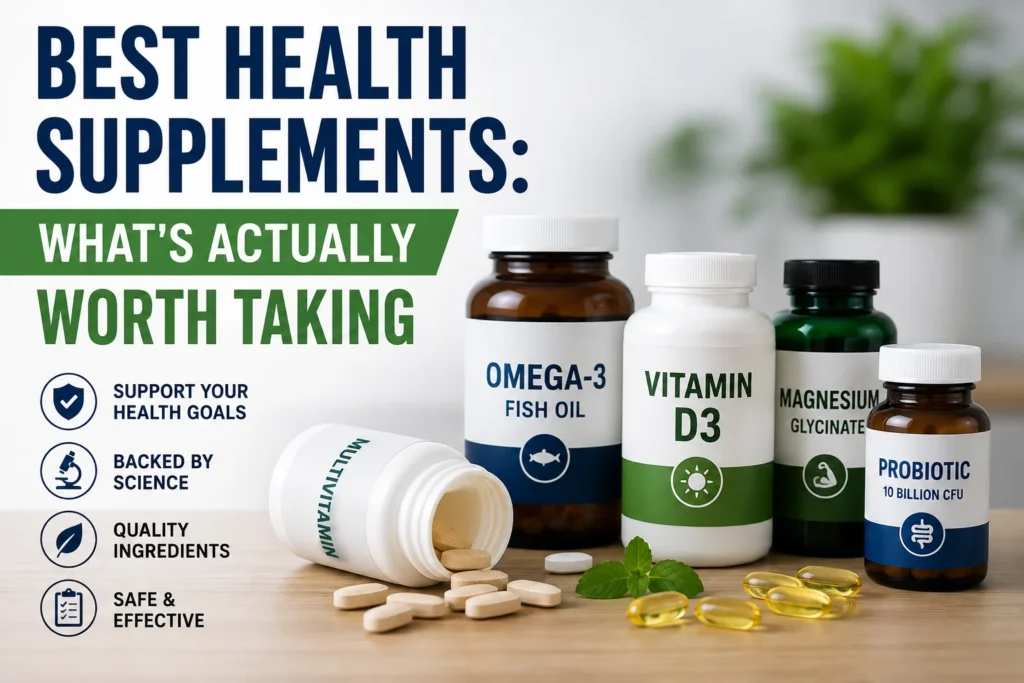
Walk into any pharmacy, and you’ll see hundreds of bottles promising more energy, better sleep, and stronger immunity. Most people don’t need all of them. A few, taken consistently, cover almost everyone’s basic gaps.
Here’s a straightforward look at the supplement categories that come up again and again in nutrition guidance, what each one does, and how to figure out which ones are actually worth your money.
What to Look For Before You Buy
Not every supplement on a shelf earns its price tag. Before adding anything to your routine, check for a few things:
- Third-party testing. Look for a seal from NSF, USP, or Informed Sport. It means an outside lab checked what’s actually in the bottle.
- Dosage that matches the research. A “proprietary blend” that hides exact amounts is a red flag.
- Form matters. Some nutrients (like magnesium glycinate versus magnesium oxide) absorb far better than others.
- Your actual diet. Supplements fill gaps; they don’t replace food. If you already eat oily fish twice a week, you may not need an omega-3 capsule.
The Supplements Worth Considering
Multivitamins
A decent multivitamin is less about magic and more about insurance. If your meals are inconsistent, a daily multi can help cover the basics: B vitamins, zinc, vitamin A, and small amounts of minerals people commonly fall short on. It’s not a substitute for eating vegetables, but it’s a reasonable backstop.
Vitamin D
This one comes up constantly, especially for people who spend most daylight hours indoors or live somewhere with long winters. Vitamin D affects bone health and immune function, and blood levels tend to run low in a lot of adults. A simple blood test can tell you whether you’re actually deficient before you start dosing yourself.
Omega-3s (Fish Oil or Algae Oil)
Omega-3 fatty acids support heart and brain health, and most diets lean too heavily on omega-6s in comparison. Fish oil is the classic source; algae oil is a solid plant-based alternative if fish isn’t your thing.
Probiotics
Gut health has become one of the most talked-about areas in supplements, and for good reason. A quality probiotic can help after a course of antibiotics or during periods of digestive trouble. That said, strains matter a lot here, and what works for bloating isn’t the same strain that helps with, say, immune support. Read the label, not just the marketing.
Magnesium
Magnesium plays a role in muscle function, sleep, and stress response, and it’s one of the more commonly under-consumed minerals. Glycinate and citrate forms tend to be gentler on the stomach than oxide.
Protein Powder
For anyone strength training or simply not hitting enough protein through meals, a whey, casein, or plant-based protein powder is a convenient way to close the gap. It’s food, essentially, just in a more concentrated form.
Choosing Between Brands
Once you know which category you need, comparing brands comes down to three things: verified dosage, third-party testing, and price per serving. A $40 bottle with a testing seal and clear dosing beats a $15 bottle with a vague “proprietary formula” almost every time. Ignore the packaging and read the supplement facts panel first.
A Quick Word of Caution
Supplements interact with medications and existing conditions more often than people expect. Anyone on blood thinners, for example, needs to be careful with fish oil and vitamin E. Pregnant women need different dosing guidance across the board. Talk to a doctor or pharmacist before starting anything new, especially if you’re already taking prescription medication.