
What Are Metaverse Platforms, and How Do They Actually Work?
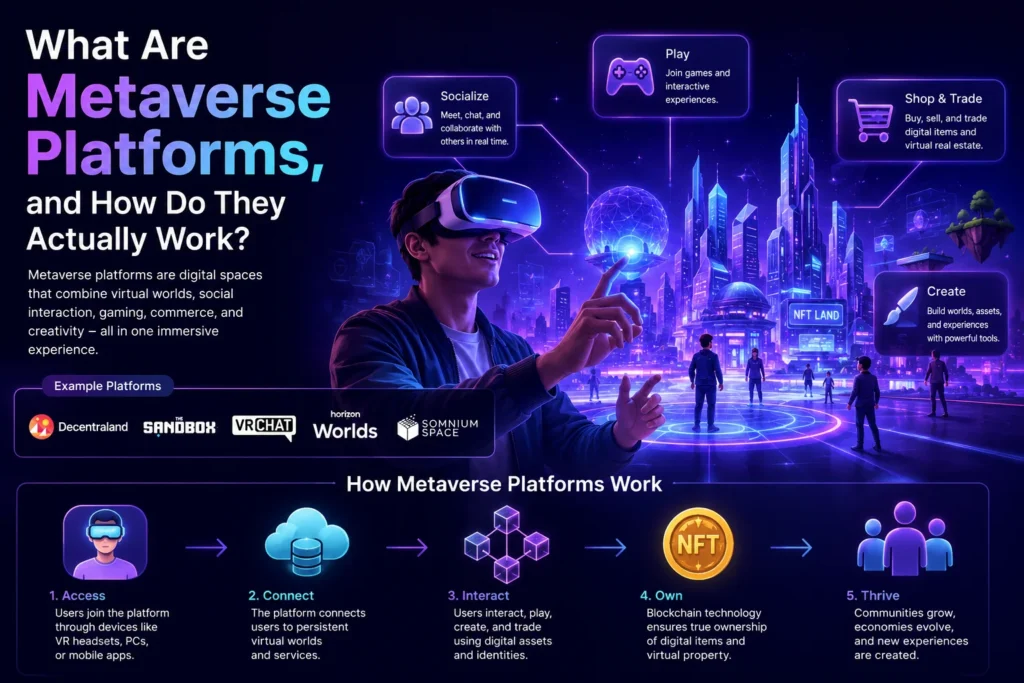
If you’re a marketer trying to figure out whether “the metaverse” is worth a line item this year, you’re not alone, and you’re not late. The space has narrowed and matured since the 2021-2022 hype cycle. What’s left is a smaller set of platforms doing genuinely useful things: virtual events, employee training, product showcases, and remote collaboration that doesn’t feel like a Zoom call with extra steps.
This guide breaks down what metaverse platforms actually are, the three categories they fall into, and what to weigh before your company puts budget behind one.
What Is a Metaverse Platform, Exactly?
A metaverse platform is software that lets people interact through avatars inside a persistent 3D digital space, usually in real time. Think of it as the difference between watching a webinar and walking into a room where other attendees can see you, hear you, and move around alongside you.
Most platforms share a few core pieces: a 3D rendering engine, avatar customization, spatial audio (so voices sound like they’re coming from a direction, not just “on” or “off”), and some way to build or furnish the environment. Newer platforms are adding AI on top of that. Instead of a static virtual showroom, the space now responds to what a visitor does, answers questions, or adjusts based on who’s in the room.
Three Categories Businesses Actually Deal With
Not every metaverse platform is built for the same job. Lumping them together is where a lot of buying decisions go wrong.
Consumer and entertainment platforms. Roblox and Fortnite fall here. Brands use these mainly for reach: concerts, branded islands, and limited-time activations aimed at a young, highly engaged audience. If your goal is awareness with a younger demographic, this is the lane.
Enterprise collaboration platforms. Meta Horizon Workrooms, Microsoft Mesh, and Apple Vision Pro sit in this category. These are built for internal use: meetings, design reviews, onboarding, and remote teams that need to feel present together. Spatial is a similar option built specifically around cross-device collaboration, so attendees can join from VR, desktop, or mobile without needing the same hardware.
Industrial and spatial computing platforms. This is the category most marketers overlook. Nvidia Omniverse, Siemens’ Immersive Engineering platform, and Hexagon’s HxDR are used to build digital twins: virtual replicas of factories, products, or supply chains. It’s less about avatars in a lobby and more about engineering teams testing a production line before it’s built.
Knowing which bucket your use case fits into will save you from evaluating a gaming platform for an enterprise training rollout or the reverse.
What Companies Are Actually Using These Platforms For
Based on how businesses are deploying these tools right now, the practical use cases cluster into a handful of areas:
- Virtual events and trade shows. Product launches, career fairs, and conferences hosted in a branded 3D space instead of a webinar platform.
- Onboarding and training. Paramount Global piloted VR onboarding that let new hires tour studio production lots virtually before setting foot on the actual lot, a way to build familiarity before day one.
- Virtual commerce. Companies are starting to treat these spaces as an actual sales channel, not just a branding exercise, letting customers browse and buy inside the environment itself.
- Digital twins for operations. Manufacturing and engineering teams use platforms like Omniverse to simulate changes before touching physical equipment, cutting down on costly trial and error.
What to Weigh Before You Commit
A few things tend to trip companies up after they’ve already bought in.
Cost isn’t just the software. Hardware for immersive experiences, whether headsets or supporting infrastructure, adds up fast, and it’s a real budget line, not an afterthought.
Adoption is harder than it looks. Even a well-designed virtual space fails if employees or customers don’t want to put on a headset or learn a new interface. Training your own team on the tool is often the quieter, bigger cost.
Interoperability is still a work in progress. Assets, identities, and experiences don’t move cleanly between platforms yet. If your team builds a virtual showroom on one platform, don’t assume you can port it elsewhere without rebuilding.
Match the platform to the goal, not the trend. A consumer platform built for entertainment isn’t the right fit for a compliance training program, and an industrial digital-twin tool isn’t built for a public-facing event.







1 thought on “What Are Metaverse Platforms, and How Do They Actually Work?”