
What Eric Lefkofsky’s Career Teaches About Building Companies That Last
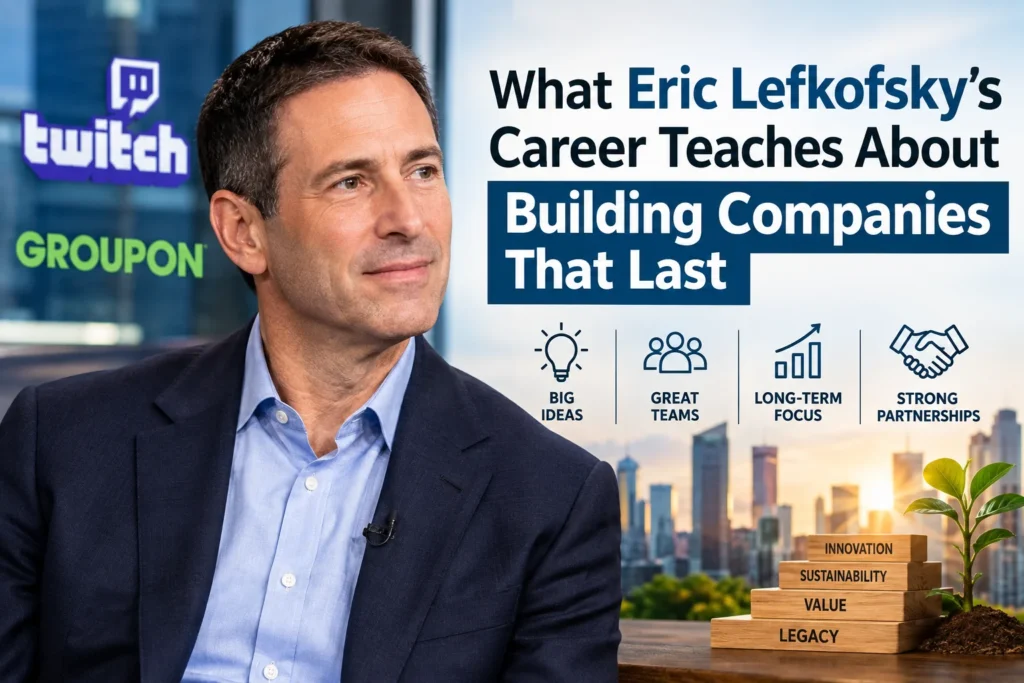
Eric Lefkofsky has started or co-founded more than a dozen companies since the late 1990s, and four of them (Echo Global Logistics, InnerWorkings, Groupon, and now Tempus AI) went public. That track record makes him one of the more instructive case studies in modern American entrepreneurship, not because every venture worked, but because of how he kept working the same problem-solving formula across wildly different industries: printing, logistics, advertising tech, daily deals, and now cancer diagnostics.
Here’s what stands out from his career and what founders can actually take from it.
Start With a Problem You’ve Personally Hit
Lefkofsky’s ventures tend to trace back to a specific operational headache rather than a market trend he read about. InnerWorkings grew out of frustration with an inefficient print supply chain. Echo Global Logistics followed directly from trouble finding trucks to move that printed material. MediaBank came from noticing how Echo’s own marketing materials were bought and tracked by media buyers. Each company solved the problem the last one exposed.
That’s a useful pattern for any founder stuck choosing between ideas: the strongest ones often surface as a byproduct of running a different business, not from a standalone brainstorm.
Sell the Vision Before the Product Is Finished
People who’ve worked with Lefkofsky consistently point to the same traits: decisive, detail-oriented, and an exceptional salesperson, sometimes to the point of overconfidence. That combination shows up clearly in how Tempus AI was pitched from day one. At the company’s first Investor Day in 2026, Lefkofsky framed the mission in stark terms, explaining that Tempus needed two things to unlock AI in precision medicine: proprietary data at scale, and a distribution system to put insights into physicians’ hands.
Ambitious framing like that only works if you can eventually back it up. Tempus has since built one of the larger multimodal health data libraries in the industry and expanded into oncology, cardiology, and hereditary testing, with first-quarter 2026 revenue up 36% year-over-year to $348 million.
Know the Difference Between Founding and Running
Lefkofsky has said one of the clearest lessons from his own career is about role, not strategy. Before Tempus, he was rarely the actual CEO of the companies he built; at Groupon, he chaired the board and only stepped into an interim co-CEO role after Andrew Mason was let go. Tempus changed that deliberately.
“When I decided to start Tempus, I knew that I kind of never again wanted to not be the CEO,” he’s said. “I like making calls. I like being responsible if it goes right. I like being responsible if it goes wrong.”
That’s a distinction worth sitting with. Founding something and running it day-to-day for a decade require different appetites, and Lefkofsky’s own history shows he didn’t always choose the second one until later in his career.
Expect the Long Version to Take Longer Than the Short Versions
Most of Lefkofsky’s earlier companies had relatively fast exits: Starbelly sold nine months after launch, Mediaocean’s majority stake was acquired for $720 million, InnerWorkings and Echo both went public within a few years of founding. Tempus is a deliberate departure. Founded in 2015, it’s now approaching its second decade under Lefkofsky, who has called it the company he wants to be the “enduring legacy” of his career, in an industry (healthcare) he’d previously said he’d never enter.
Building something durable, especially in a regulated, data-heavy field like diagnostics, doesn’t reward the same playbook that works for a nine-month flip. It rewards patience with the same problem over many years.








1 thought on “What Eric Lefkofsky’s Career Teaches About Building Companies That Last”