
Buying an Amazon FBA Business: What to Know First
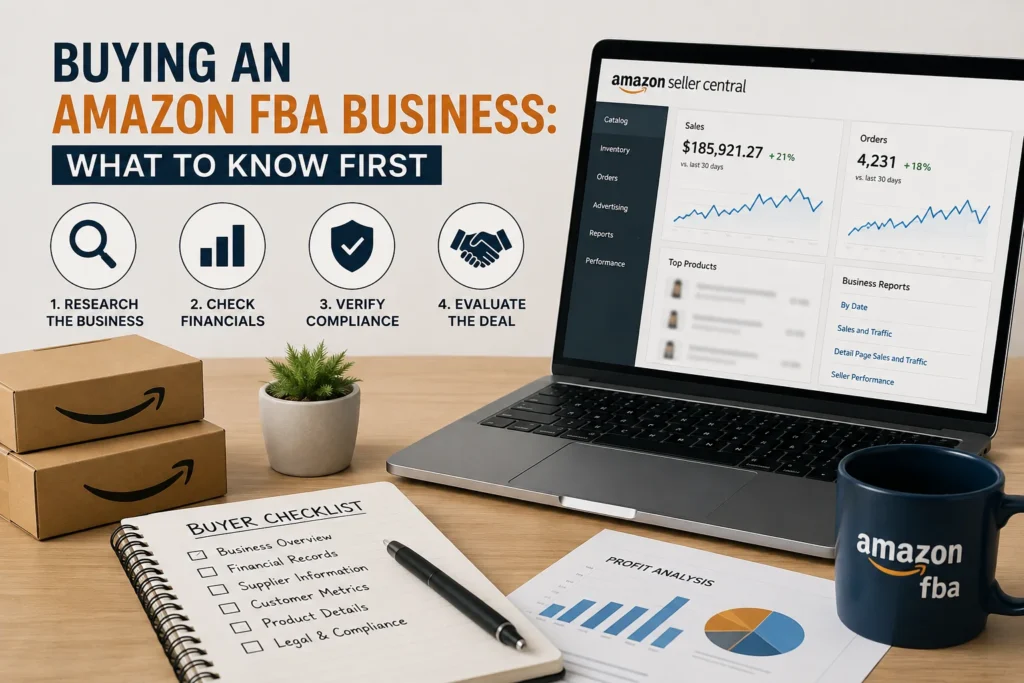
Scroll through any marketplace and you’ll find hundreds of Amazon FBA businesses for sale, some priced at $15,000, others pushing past $2 million. The listings all promise the same thing: passive income, proven demand, and a business that basically runs itself. Most of them are exaggerating at least a little.
That doesn’t mean buying an FBA business is a bad move. It’s actually one of the more straightforward ways to step into e-commerce without building a brand from zero. You skip the slow, expensive product-testing phase and buy something with sales history, reviews, and (hopefully) a working supply chain already in place. But the gap between a good deal and an expensive mistake usually comes down to how carefully you read the numbers before you sign anything.
What “FBA Business for Sale” Actually Means
When someone lists an FBA business, they’re selling the Amazon seller account, the product listings, the inventory (sometimes), supplier relationships, and whatever brand assets exist, like a logo, trademark, or Amazon Brand Registry status. You’re not just buying a product. You’re buying a system: rankings, review history, ad campaigns, and a track record Amazon’s algorithm already trusts.
That last part matters more than most buyers realize. A brand-new listing starts at zero visibility. An acquired one might already rank on page one for its main keywords, which is a huge head start.
Where These Listings Show Up
A few platforms specialize in FBA acquisitions, and each has a different flavor:
- Broker marketplaces vet sellers, verify financials, and often handle escrow. You’ll pay a bit more, but the diligence is partly done for you.
- Peer-to-peer marketplaces list businesses directly from owners. Prices can be lower, but you’re doing more of the legwork yourself.
- Amazon aggregators occasionally sell off brands they’ve acquired and decided not to keep. These deals tend to be larger and more polished.
I’d steer a first-time buyer toward a brokered listing. It’s not that peer-to-peer deals are scams; most aren’t. It’s that verifying seller-provided revenue claims without help is genuinely hard, and a broker has already asked the awkward questions for you.
The Numbers That Actually Matter
Sellers love to lead with revenue. Ignore that for a second and look at net profit instead, specifically what’s called seller discretionary earnings (SDE), profit plus any owner perks added back in. That’s the figure most FBA valuations are built on.
Multiples typically run 2.5x to 4x annual SDE, though strong brands with registered trademarks and diversified traffic can command more. A store doing $500,000 in revenue but only $40,000 in real profit isn’t worth nearly what the top-line number suggests.
A few things worth digging into before you get attached to a listing:
Traffic concentration. If 90% of sales come from Amazon PPC ads rather than organic or external traffic, profit margins are fragile. Turn the ad spend down, and revenue often follows it down fast.
Review health. Check the review velocity, not just the star rating. A sudden spike in reviews right before a sale is worth asking about directly.
Account history. Pull the seller’s account health dashboard. Past suspensions, even resolved ones, are a signal worth weighing.
Supplier terms. Ask whether supplier relationships transfer, and get pricing and minimum order quantities in writing. Some owners quietly negotiate better rates than what’s listed.
Seasonality. A Q4-heavy category (think holiday decor) will show inflated trailing-twelve-month numbers if you’re buying in November. Ask for month-by-month data, not just an annual total.
Red Flags Worth Walking Away From
Not every listing deserves a second look. Watch for a seller who won’t share Seller Central access during due diligence or who explains a sudden profit jump with something vague like “we scaled our marketing.” Ask what changed, specifically.
Be cautious, too, of businesses selling in a single, hyper-competitive category with no differentiation, patent-pending products with pending litigation, or accounts still within the return window after a recent policy violation. None of these automatically kill a deal, but each one should lower your offer or push you toward more verification.
How Financing Usually Works
Most buyers use some mix of personal savings, an SBA loan (for businesses at a certain revenue threshold), or seller financing, where the previous owner accepts payments over time instead of a lump sum. Seller financing is worth asking about directly. An owner willing to take payments over 12 to 24 months is usually more confident their numbers hold up, since they’re still financially tied to the outcome.
A Realistic Timeline
Budget more time than you’d expect. Sourcing a listing, reviewing financials, verifying Seller Central data, negotiating terms, and completing the Amazon account transfer typically takes six to twelve weeks from first contact to close. Rushing this stage is where most bad purchases happen.








1 thought on “Buying an Amazon FBA Business: What to Know First”