Best MetCon Gyms Compared: CrossFit, F45, Orangetheory, and Hyrox
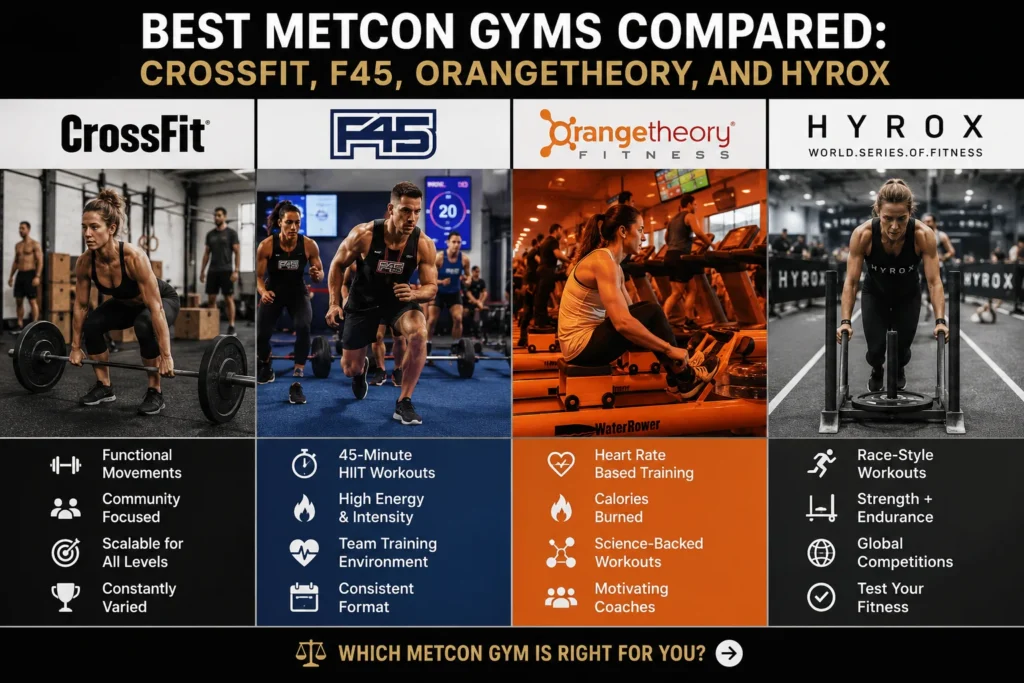
Search “MetCon gym,” and you’ll get a flood of options that all promise the same thing: sweat, heart-rate spikes, and that wobbly-legged feeling walking to your car. But not every MetCon gym trains you the same way, and picking the wrong one can mean months of effort with results that don’t match your goal. Here’s how the major players actually compare.
What “MetCon” Actually Means
MetCon is short for metabolic conditioning, workouts built to hit your body’s energy systems hard rather than just burn time on a treadmill. The style got mainstream traction through CrossFit, where a WOD (workout of the day) usually pairs a strength or skill segment with a timed conditioning piece. The payoff isn’t only the calories burned during class. Intense conditioning work triggers excess post-exercise oxygen consumption (EPOC), so your metabolism stays elevated for hours after you’ve left the building.
What to Look For in a MetCon Gym
Before comparing brands, get clear on three things: your budget, your injury history, and whether you want a scored, competitive vibe or a low-pressure group class. A gym with unscaled Olympic lifts is a poor fit for a true beginner, and a gym built around light circuits won’t build real strength.
CrossFit, F45, Orangetheory, and Hyrox at a Glance
| Gym Type | Monthly Cost | Intensity Focus | Best For |
|---|---|---|---|
| CrossFit | $150–$200 | Barbell strength + metabolic conditioning | Building strength and conditioning together |
| F45 | $170–$250 | Circuit-based functional training | Beginners who want variety without barbells |
| Orangetheory | $50–$150 | Heart-rate zone training | Data-driven cardio and calorie tracking |
| Hyrox-style boxes | $150–$200 | Race-pace running + functional stations | Endurance and race prep, minimal barbell work |
CrossFit: Strength-First Conditioning
CrossFit boxes lean hardest into barbell work, gymnastics movements, and Olympic lifting, then layer conditioning on top. That combination makes it the strongest option if your goal includes actual strength gains, not just calorie burn. The tradeoff is a steeper learning curve. A 2018 systematic review by Claudino and colleagues found CrossFit produces meaningful fitness improvements, but coaching quality varies a lot between affiliates, so vet the box before committing.
F45: Structured Variety Without the Barbell
F45 rotates members through timed stations with catchy class names and daily themes. It skips heavy barbell lifts, which lowers the injury learning curve for newcomers but caps how much raw strength you’ll build over time.
Orangetheory: Metrics for People Who Like Data
Orangetheory hands you a heart-rate monitor and pushes you to spend roughly 12 minutes in the “orange zone” each session. If you’re motivated by seeing numbers on a screen, this format delivers that feedback loop better than almost anyone else in the category.
Hyrox-Style Training: Built for Endurance
Hyrox blends running with functional stations like sled pushes and rowing, with far less barbell and gymnastics work than CrossFit. It suits people training for a specific race or who want steady endurance gains without heavy lifting.
How to Choose
Match the gym to your actual goal, not the one with the flashiest Instagram feed. Want strength and conditioning together? CrossFit. Want structure without barbells? F45. Want data-driven cardio? Orangetheory. Training for a race? A Hyrox-style box. Whatever you pick, sit in on a class first and ask the coach how they scale workouts for beginners.