What Is the UGE Schedule Source? A Complete Overview
If you’ve landed on this page because someone told you to “check UGE Schedule Source” for your shift, you’re not alone. It’s one of those tools that gets handed to you with zero explanation, and you’re left guessing what it actually does.
Here’s the short version: UGE Schedule Source is a cloud-based workforce scheduling platform. It’s also known as TeamWork by ScheduleSource, and the “UGE” in the name refers to the Universal Grid Engine that powers it behind the scenes.
What UGE Schedule Source Actually Does
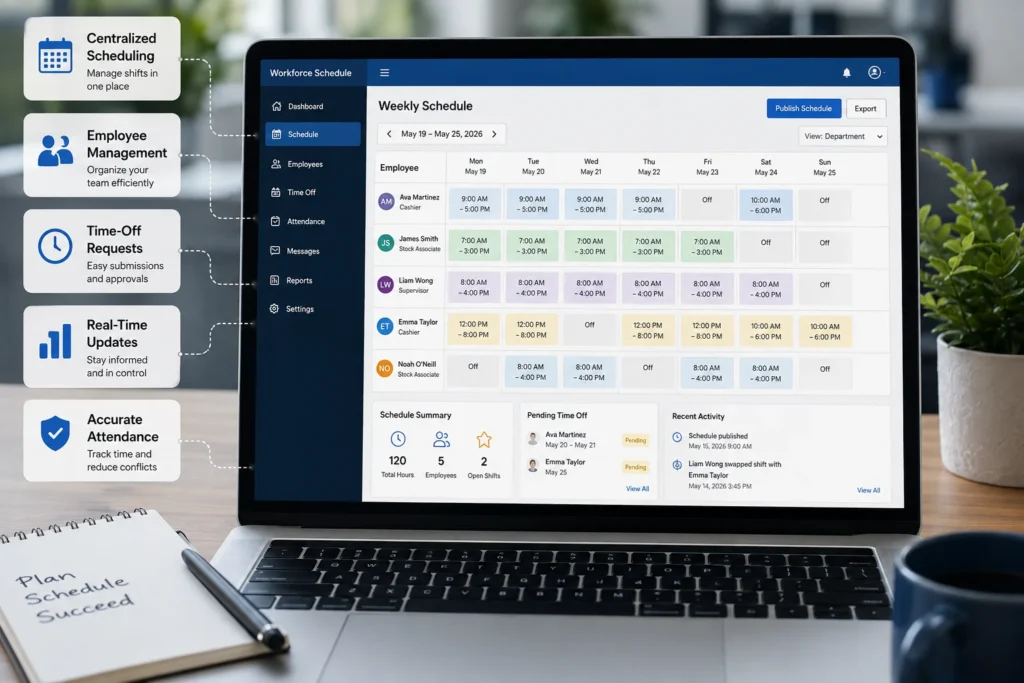
At its core, this is a system for managing employee shifts, attendance, and time-off requests in one place. Instead of a manager juggling spreadsheets and group texts, staff log in to see their schedule, request changes, and swap shifts with coworkers, all with manager approval built into the process.
The platform handles three main jobs:
- Scheduling. Managers build shifts, assign roles, and fill staffing gaps based on demand.
- Time and attendance. It compares planned shifts against actual clock-ins and clock-outs, which helps catch overtime and attendance issues early.
- Leave management. Employees submit time-off requests through the system instead of emailing a supervisor and hoping it doesn’t get lost.
There’s also a rule-based layer underneath all this. Organizations can build in labor law requirements like mandatory breaks, overtime caps, and minimum staffing ratios, and the system flags conflicts before they turn into compliance headaches.
Who Uses It
You’ll mostly find UGE Schedule Source in places where shift work is complicated and getting it wrong is expensive. Hospitals and health systems use it to coordinate care teams around the clock. Universities use it for student workers, dining halls, and campus operations. Retail chains and hospitality businesses use it to manage rotating staff across multiple locations.
If your employer put you on this system, it’s usually because managing shifts by hand stopped being practical once the team grew past a certain size.
Logging In and Getting Started
Access is typically organization-specific. Your employer sets up a portal (sometimes with a URL like uge.schedulesource.net or a similar variant) and issues you login credentials. If you’re not sure where to log in, the fastest path is asking your HR department or direct supervisor. There’s no public, one-size-fits-all login page, since each organization runs its own instance of the platform.
Once you’re in, expect a fairly standard dashboard: your upcoming shifts, any pending time-off requests, and a way to request a swap if you can’t make a scheduled shift.
How It Stacks Up Against Alternatives
It’s worth knowing this isn’t the only tool in its category. Competitors like Deputy, UKG Ready, and TimeTrex serve similar needs, and ScheduleSource has been building this kind of software since 1999, so it’s not a new player. What tends to set it apart is the depth of its rule-based scheduling. Organizations with complex union rules, layered overtime policies, or strict compliance requirements often lean on it specifically because it can encode those rules directly into the scheduling logic, rather than relying on a manager to remember them.
That said, for a small team with simple shift patterns, a lighter tool might honestly be overkill in the other direction, and something like Deputy could feel less clunky day to day.
A Quick Note on the Name
One thing that trips people up: some websites describe “UGE Schedule Source” as if it’s a standalone product, when it’s really a ScheduleSource TeamWork deployment tied to a specific organization. So if you search around and get slightly different explanations, that’s why. The safest assumption is that it’s your employer’s particular setup of the TeamWork platform.
Common Questions
Is UGE Schedule Source free? Pricing depends on your organization’s contract with ScheduleSource. As an employee, you won’t pay anything directly; your employer covers the cost.
Can I access it from my phone? Yes, it’s built to be mobile-friendly, and most organizations offer app or mobile web access so you can check shifts on the go.
What do I do if I can’t log in? Contact your HR or scheduling department first. Since each portal is organization-specific, IT support outside your workplace usually can’t help.
Does it integrate with payroll? Many deployments connect scheduling and attendance data directly to payroll systems, which is part of why the time-tracking accuracy matters so much.
If you’re trying to use the system for the first time, your best move is still a quick conversation with whoever manages scheduling at your workplace. The platform itself is flexible, but how it’s configured varies a lot from one organization to the next.