
Electrolit vs Pedialyte: Which One Should You Actually Reach For?
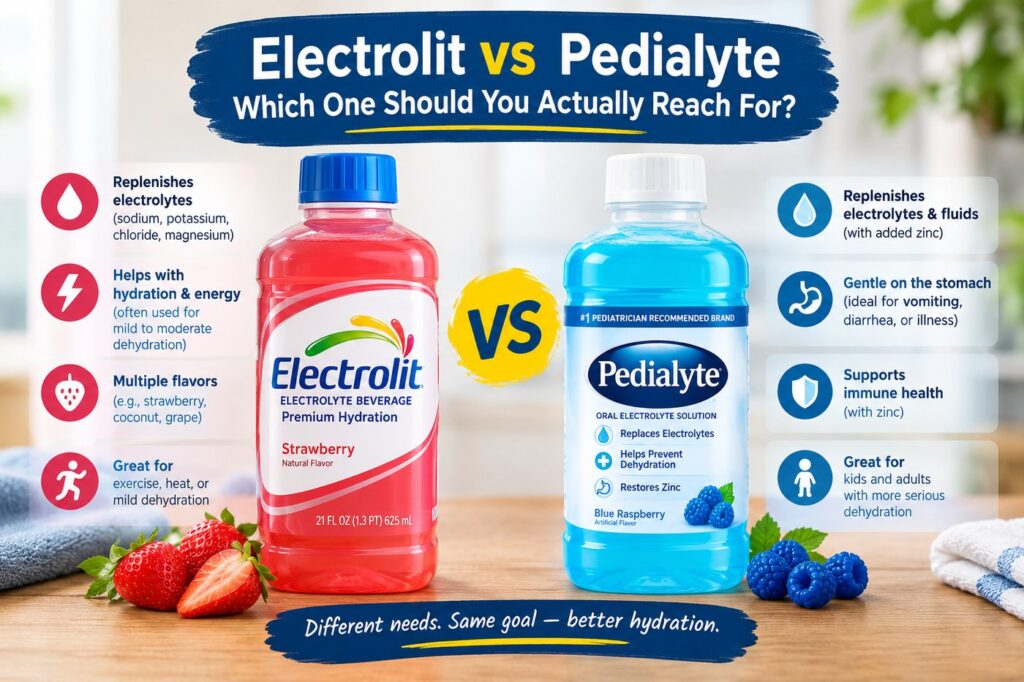
Standing in the pharmacy aisle staring at two nearly identical bottles isn’t fun when you’re already dehydrated. Electrolit and Pedialyte look similar, cost similar, and both promise faster hydration than water. But they’re built for slightly different jobs, and picking the wrong one won’t ruin your day, it’ll just mean you’re not getting the fastest possible relief.
Here’s the short version: Pedialyte is the medically studied option, formulated and marketed as an oral rehydration solution for illness-related fluid loss in kids and adults. Electrolit leans into the “recovery drink” lane, popular for workouts, hangovers, and hot days, with a fuller sugar profile and a bigger flavor lineup.
Quick Comparison
| Electrolit (per 500 ml) | Pedialyte Classic (per 1L) | |
|---|---|---|
| Sodium | Up to 500 mg | ~1,080 mg |
| Potassium | ~200 mg | ~780 mg |
| Sugar source | Dextrose (real sugar) or zero-sugar version | Dextrose, sucralose/acesulfame K in flavored versions |
| Calories | Varies by flavor; the zero line has none | 120 per liter |
| Electrolytes included | Sodium, potassium, magnesium, calcium, chloride | Sodium, chloride, potassium |
| Marketed for | Workouts, hangovers, everyday hydration | Illness (vomiting, diarrhea), heat exhaustion, kids |
| Doctor-recommended status | Not clinically marketed | #1 pediatrician-recommended brand |
Sugar and Sweeteners: The Real Difference
Electrolit’s original formula uses dextrose as its main sweetener, a fast-digesting sugar the company says helps pull sodium and fluid into cells more quickly. If you want less sugar, Electrolit Zero swaps this out entirely and uses stevia instead, with no calories.
Pedialyte keeps sugar intentionally low, around 25 grams per liter bottle, deliberately avoiding sucrose because it can worsen diarrhea by drawing water into the intestines rather than out. Flavored Pedialyte relies on sucralose and acesulfame potassium to stay sweet without adding more carbohydrate load, which is part of why it’s the one pediatricians tend to reach for first.
Electrolyte Levels: Pedialyte Runs Higher
Per liter, Pedialyte packs noticeably more sodium and potassium than Electrolit. That’s by design: Pedialyte contains roughly 1,035mg of sodium and 780mg of potassium per liter, well above what a typical sports drink like Gatorade provides. That higher mineral load is exactly what’s needed when fluid loss comes from vomiting or diarrhea rather than sweat. Electrolit’s profile is lighter and rounds out with magnesium and calcium, minerals more associated with muscle recovery than acute illness.
When Each One Actually Makes Sense
Reach for Pedialyte when a stomach bug, food poisoning, or a kid running a fever needs real fluid replacement. This isn’t guesswork. The World Health Organization’s oral rehydration formula, which Pedialyte’s science is built on, was developed specifically to treat dehydration from diarrhea and remains one of the most studied rehydration approaches in medicine.
Reach for Electrolit after a hard workout, a rough night out, or a day spent in the heat where you want something that tastes less clinical and comes in more flavor options. It’s not a medical product, and it doesn’t claim to be. It’s positioned closer to a premium sports drink with a stronger electrolyte punch than Gatorade.







1 thought on “Electrolit vs Pedialyte: Which One Should You Actually Reach For?”