15 Front Wall Design Ideas for Homes
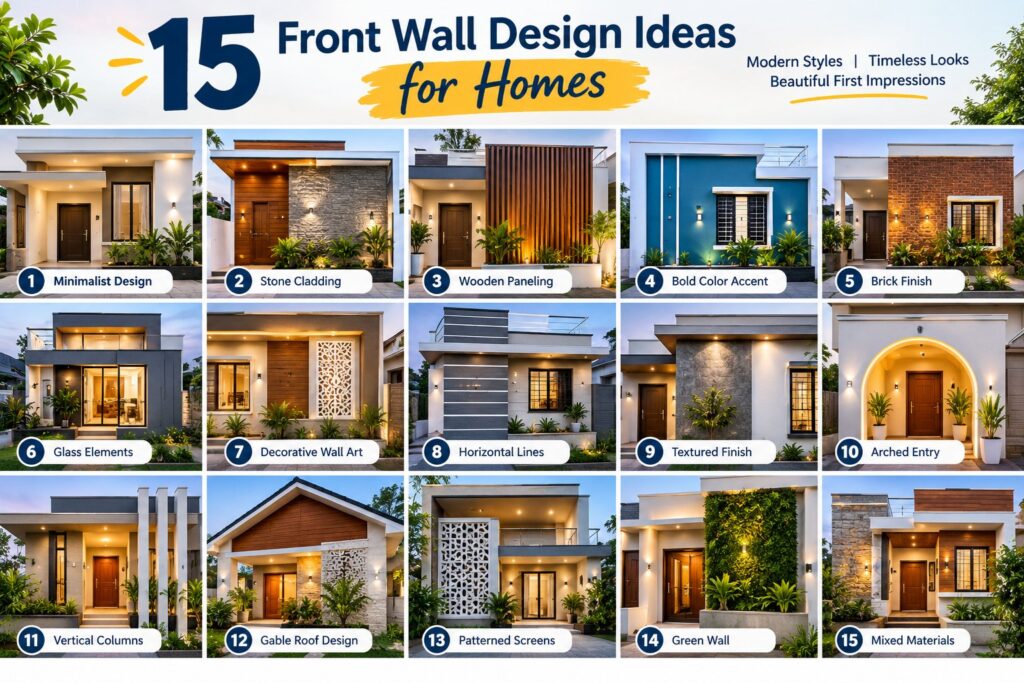
Your front wall is the first thing anyone sees, whether it’s a guest walking up the driveway or a neighbor passing by. A tired, flat facade can make even a well-built house look forgettable, while a thoughtful design turns it into something people remember. Here’s a rundown of ideas worth considering, along with the trade-offs each one comes with.
Stone Cladding
Natural stone gives a home instant weight and permanence. Slate, sandstone, or quartzite panels work especially well on a lower “accent” band, paired with plain paint above. It’s not cheap, and installation takes skill, but it rarely goes out of style. If the budget is tight, thin stone veneer gets you 80% of the look for a fraction of the cost.
Exposed Brick
Brick walls have made a comeback, partly because they age well and partly because they need almost no maintenance. A mix of textured and smooth brick, or brick laid in a herringbone pattern instead of the standard running bond, adds visual interest without extra cost.
Textured Stucco
Stucco is popular in warmer climates for a reason: it handles heat well and can be finished in dozens of textures, from smooth to heavily troweled. Two-tone stucco, where the base and trim use slightly different shades, is a subtle way to add depth without going bold.
Wood Accent Panels
A section of wood cladding, real or composite, softens an otherwise hard facade. Vertical slats in particular have become a favorite for modern builds because they draw the eye upward and pair well with concrete or stucco. Composite wood costs more upfront but skips the yearly sealing that real timber demands.
Metal Cladding
Corrugated or standing-seam metal panels give a house an industrial, contemporary edge. They’re durable and low-maintenance, though in direct sun they can heat up more than other materials, so they work best combined with shade elements like an overhang or trees.
Geometric Tile Patterns
Ceramic or cement tiles arranged in repeating geometric patterns bring color and personality to an entryway wall. This works particularly well in Mediterranean, Moroccan, or mid-century-inspired homes, where a patterned accent wall becomes the focal point of the whole facade.
Combination Facades
Mixing two or three materials, stone at the base, stucco in the middle, and wood trim near the roofline, is one of the most common approaches in newer builds. The key is restraint: pick a dominant material and use the others as accents, not equal partners, or the wall starts to look busy.
Minimalist Flat Panels
For a clean, modern look, large flat panels in fiber cement or polished concrete keep things simple. The style relies on proportion and clean lines rather than texture, so it suits homes with strong architectural geometry already in place.
Vertical Gardens and Greenery
A living wall or trellis with climbing vines softens a facade and improves air quality around the entrance. It takes more upkeep than any other option on this list, but few things make a front wall feel as alive.
Feature Lighting
Even a modest wall looks different after dark with the right lighting. Recessed uplights along the base, or a single statement fixture near the door, highlight texture and add a welcoming glow without changing the wall itself.
Choosing What Works for Your Home
Climate, architectural style, and budget usually decide more than personal taste alone. A stone-heavy design suits a traditional home in a cooler region; metal and glass lean modern and do well in dry climates; wood and greenery fit almost anywhere but need upkeep. It also helps to look at two or three neighboring houses before deciding. A design that clashes with the street’s overall look, even if it’s beautiful on its own, can hurt resale value more than people expect.