
How to Use a US Phonebook to Find Any Phone Number
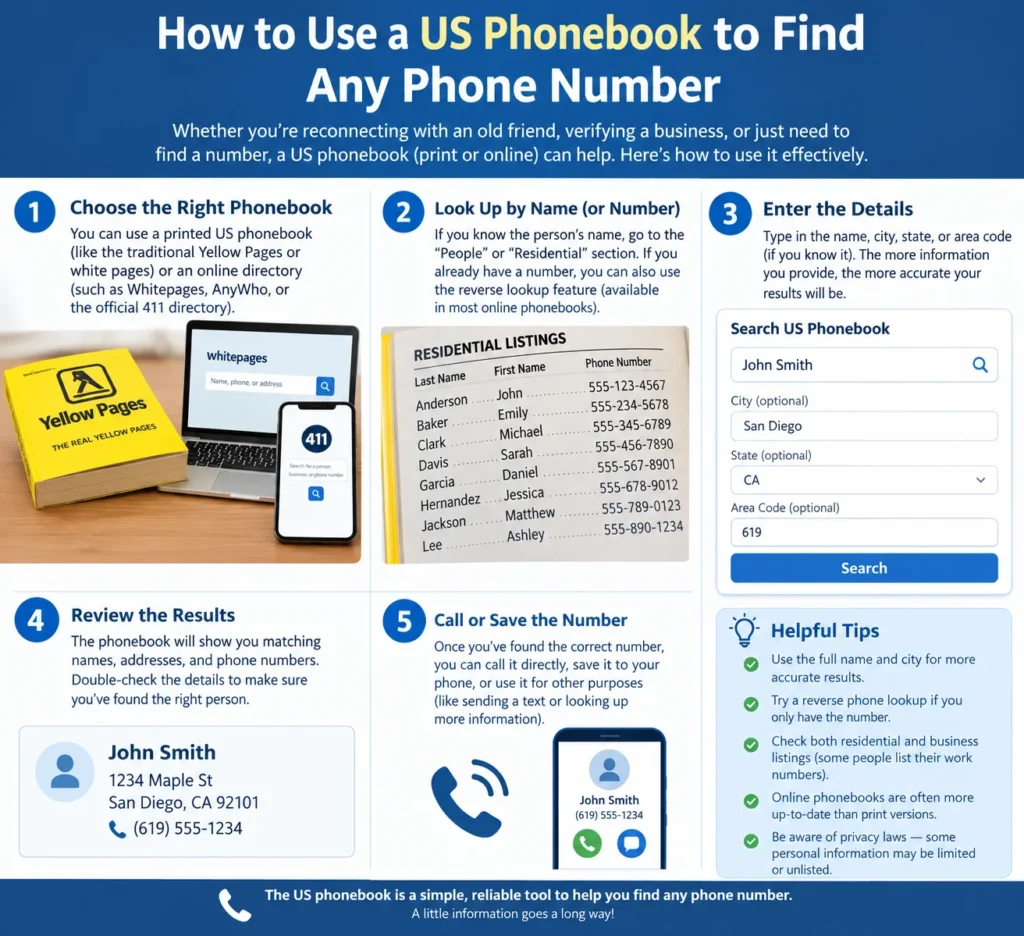
The paper phonebook that once landed on your doorstep every year is mostly gone. The need behind it isn’t. You still want a plumber’s number, an old friend’s contact, or an answer to who keeps calling at dinnertime. Today a US phonebook means a handful of online services, each with its own strengths and blind spots. This guide covers which ones to use, what’s free, and how to keep your own number from showing up where you’d rather it didn’t.
What a US Phonebook Looks Like Today
Traditionally, a phone book had two halves. White pages listed residents by name, and yellow pages sorted businesses by trade. Online versions kept that split. Residential entries come from public records, utility data, and marketing databases. Business entries come mostly from owners who claim their profiles, plus scraped data.
Here’s the catch. Cell numbers usually aren’t included unless the owner asked to be listed, so a name search often surfaces landlines and outdated addresses first. Accuracy varies, sometimes wildly. Treat every result as a lead, not a fact.
Free Ways to Look Up a Number
Start simple. Type the full name and city into a big lookup site such as Whitepages, 411.com, or Superpages. Basic results, usually a name, a city, and sometimes an address, cost nothing. Deeper reports with past addresses or relatives sit behind a paywall, and that’s where I’d slow down before paying.
For businesses, skip the people databases at first. Check the company’s own website or its Google Maps profile, since owners update those themselves. Yellow Pages sites like YP.com work well when you only know the trade and the town.
Calling 411 still works, too. Dial it, say the city, state, and name, and the system finds published listings. Per-call fees often apply, so it’s the pricey route.
Reverse Lookup: Who Just Called Me?
Reverse lookup flips the search. Enter the number, and the service tries to return a name or business. It’s handy for unknown callers, though mobile results run thin. Often you’ll see only the carrier and a spam rating. A blank result tells you something too: the line could be prepaid, spoofed, or simply private.
Before calling back, cross-check. Search the digits in quotes on Google. Read user comments on spam-reporting sites. Then let it go to voicemail. Real callers leave messages. Scammers rarely do.
People Search vs. Business Listings
These two get mixed up constantly, and the difference matters. People search tools pull from public records and data brokers, so they cover individuals but raise privacy questions. Business listings depend on owner-submitted details, which makes them fresher but limits them to companies.
Pick people search when you’re reconnecting with someone or verifying a contact. Pick business listings when you need hours, an address, or a quote. Confuse them, and you’ll end up calling a stranger or a shop that closed last spring.
Protect Your Own Listing
Here’s the part most guides skip. Your information is probably already in these databases. Most major sites offer an opt-out form, typically linked in the footer under “Remove my info” or “Privacy.” Search your own name first, copy the profile link, then submit it. Removal can take days, and entries sometimes return because data brokers recollect records.
I’m not a privacy attorney, so if you have a serious safety concern like stalking, talk to one. Also register your number with the National Do Not Call Registry at donotcall.gov. It trims telemarketing calls, though it won’t stop scammers.
FAQ: US Phonebook Questions
Q: Is there an official US phonebook?
A: No. There’s no single national listing. You’ll use several online services, plus local print books in some areas.
Q: Are online phonebooks free?
A: Basic name-and-city searches usually are. Detailed reports typically cost money.
Q: Can I find a cell phone number?
A: Sometimes. Mobile numbers are rarely listed unless the owner opted in, so expect gaps.
Q: How do I remove my number from a lookup site?
A: Use the site’s opt-out page, then recheck every few months, since listings can reappear.
Q: Is reverse lookup legal?
A: Searching public listings is generally fine. Using results to harass someone isn’t, and rules vary by state. This isn’t legal advice.



1 thought on “How to Use a US Phonebook to Find Any Phone Number”