Does Kurkure Actually Contain Plastic?
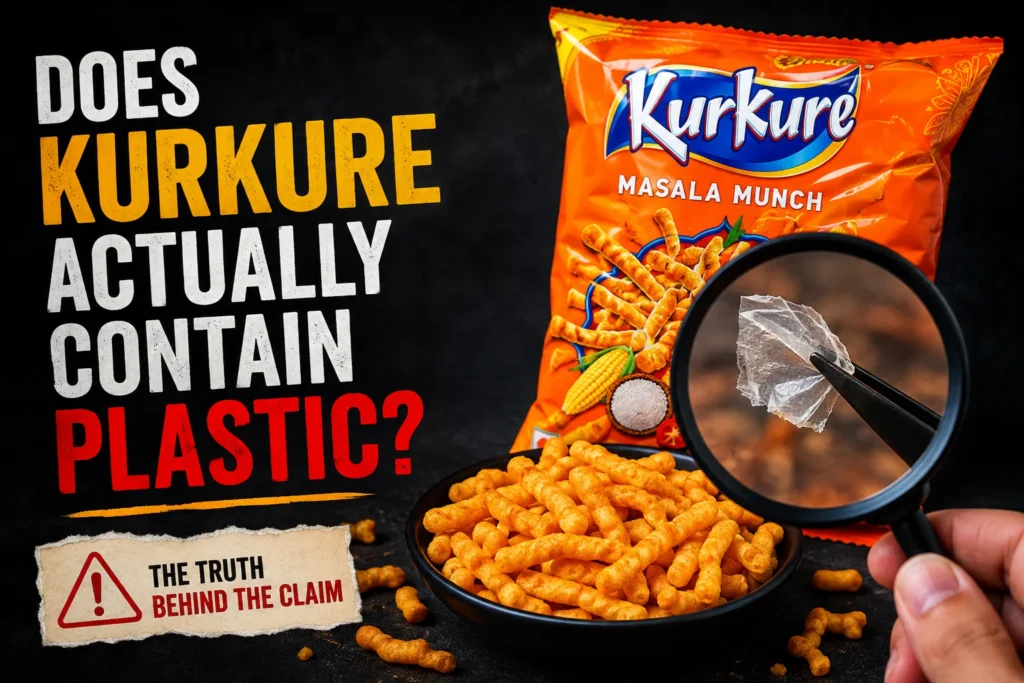
If you’ve spent any time on Indian social media, you’ve probably seen it: someone holds a lighter to a piece of Kurkure, it doesn’t burn the way they expect, and suddenly the caption reads “Kurkure is made of plastic.” It’s a dramatic claim. It’s also wrong, and the reason it spreads so easily says more about how fire tests work than it does about the snack itself.
Where the Rumor Started
The “Kurkure is plastic” claim has been circulating since around 2012, mostly through forwarded messages and videos showing someone burning a piece of the snack. When it doesn’t catch fire instantly or gives off an odd smell, people jump to the plastic explanation. It’s a satisfying story: a beloved snack hiding something sinister. The problem is that burning food and watching how it behaves tells you almost nothing about whether it contains plastic.
What’s Actually in Kurkure
According to PepsiCo India’s own ingredient listings, Kurkure is made from ricemeal, cornmeal, chickpea (gram) meal, vegetable oil, and a seasoning mix of spices, salt, and flavoring agents. Depending on the flavor, it may also contain milk solids, which is why the snack isn’t strictly vegan. None of this is a secret formula. It’s printed on every packet.
Corn and rice-based snacks are naturally starchy and oily. When you hold a flame to something with a high starch and fat content, it can char, bubble, or release smoke that smells unfamiliar, none of which is proof of plastic. Plastic doesn’t behave this way either; most plastics melt into a stretchy, dripping mass rather than crumbling or charring like a fried snack does.
Why the Burn Test Doesn’t Prove Anything
This is worth spelling out, because the burn test keeps coming back for different foods (rice, eggs, and even cheese have all faced the same rumor). Home burn tests aren’t a recognized food safety method. Regulatory bodies like the Food Safety and Standards Authority of India (FSSAI) test food using laboratory analysis, not a lighter and a phone camera. Fire reacts differently with fat, starch, sugar, and protein, and an untrained eye can easily misread that reaction as something suspicious.
PepsiCo has publicly and repeatedly denied the claim, stating that Kurkure contains no plastic and that all ingredients comply with Indian food safety regulations. Legal notices were also sent to some of the original sources spreading the rumor after it kept resurfacing years after being debunked.
So Is Kurkure Safe to Eat?
From an ingredients standpoint, yes, it’s a processed, packaged snack, not plastic. That doesn’t mean it’s health food. Like most fried, salted snack foods, it’s high in sodium and refined starch, so moderation matters more than the plastic myth does. If you’re concerned about what’s in your food, the ingredient panel on the packet is a far more reliable source than a video of someone burning a chip.
The Bottom Line
Kurkure doesn’t contain plastic. The rumor comes from a flawed burn test that misreads how starchy, oily food reacts to fire. The real ingredient list, rice, corn, chickpea meal, oil, and seasoning, has been public for years and hasn’t changed because of the myth. If a health claim about a well-known packaged food seems shocking, it’s worth checking the label before believing the lighter test.