
How to Choose a Wedding Venue: A Step-by-Step Guide
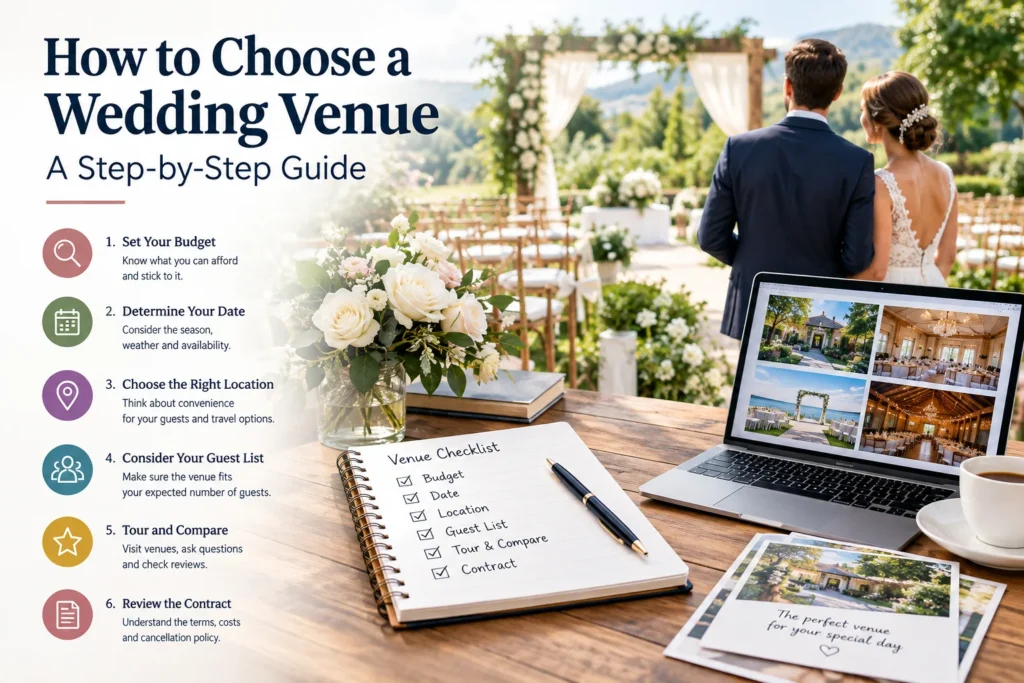
Picking a venue is the first big decision you’ll make as an engaged couple, and it’s the one that shapes almost everything else. Your date, your guest count, your caterer, and even your color palette often trace back to whatever room or field or barn you eventually sign a contract for. That’s a lot of pressure to put on one choice.
Here’s the good news: the process gets a lot less overwhelming once you break it into a clear order. Budget first, guest count second, style third, then logistics. Skip that order and you’ll end up touring venues you can’t afford or falling for a barn that can’t fit your 150-person guest list.
Step 1: Set Your Venue Budget Before You Tour Anything
Venue and catering typically eat up 30 to 50 percent of a total wedding budget, depending on whether food and drink are bundled into the rental fee. According to The Knot’s 2026 Real Weddings Study, the average wedding venue costs $12,900, and 76% of couples say price is the single most important factor in choosing one. So you’re not alone if the budget conversation feels stressful. Almost everyone puts price at the top of the list.
Before you book a single tour, sit down with your partner (and anyone contributing financially) and land on a real number. Not a wish, a number. Include these line items so you’re not blindsided later:
- Rental fee for the ceremony and/or reception space
- Required catering minimums, if the venue has an in-house caterer
- Bar service, whether it’s included or an add-on
- Service charges and gratuities (often 20 to 25 percent on top of the base price)
- Security deposits and cleanup fees
- Rental furniture, if the space is a blank shell
A venue that looks affordable on its website can end up costing far more once minimums and service fees are added in. Ask for a full, itemized quote before you get attached to a place.
Step 2: Nail Down Your Guest Count
Guest count and venue choice are locked together. A 40-person backyard wedding and a 250-person hotel ballroom wedding aren’t the same search at all, so guessing at a number wastes your time.
Draft a real guest list with your partner, even a rough one, before you start browsing venues online. Add a buffer of 5 to 10 percent for the people you’ll inevitably remember later. Then look for spaces that comfortably hold that number, not the bare minimum capacity listed on their site. A room rated for 150 rarely feels comfortable with 150 people, a dance floor, a DJ booth, and a bar all crammed in.
Step 3: Decide Between Local, Hometown, or Destination
This choice narrows your search dramatically, so tackle it early.
- Local wedding: Cuts travel costs, makes site visits easy, and lets you lean on vendors you already trust.
- Hometown wedding: A good fit if you or your partner feel a strong pull to where you grew up, especially if family still lives nearby.
- Destination wedding: Works well for smaller guest lists or couples who want the trip itself to be part of the celebration, though it usually means a smaller RSVP count and more coordination from afar.
None of these is objectively better. It’s really a question of what matters more: convenience, sentiment, or adventure.
Step 4: Define Your Style and Setting
Once budget, guest count, and location are settled, you can finally get to the fun part: picking a vibe.
Sit down together and answer a few quick questions. Indoor or outdoor? Rustic barn or modern gallery? Formal ballroom or relaxed backyard? You don’t need every detail figured out, just enough direction to filter venues that clearly don’t match. A minimalist loft space and a garden estate solve completely different design problems, and touring both wastes an afternoon you don’t get back.
If you’re stuck, save five to ten venue photos that genuinely excite you and look for the pattern. Most couples find they gravitate toward either warm and natural or clean and architectural, rarely both.
Step 5: Check Availability and Book Early
Popular venues get reserved 12 to 18 months out, sometimes longer for Saturdays in peak season (typically May through October). If you’ve already picked a date, confirm availability before you fall in love with anything. If your date is flexible, ask venues which weekends are open, since a Friday or Sunday booking can sometimes save you thousands.
Booking early isn’t just about securing your first choice. It usually means better rates too, since venues often raise prices as their calendar fills in.
Step 6: Ask What’s Actually Included
Two venues at the same price point can offer wildly different value. Before comparing quotes side by side, ask each one:
- Is there an on-site coordinator, and what exactly do they handle?
- Are tables, chairs, and linens included, or do you need to rent them separately?
- Is there a preferred vendor list, and are you required to use it?
- What’s the rain plan if you’re considering an outdoor ceremony?
- Is there a bridal suite or private space to get ready?
- What time does music need to end, and is there a noise curfew?
An on-site coordinator in particular can be a huge relief if you’re planning without a full-service wedding planner. Just get clear on what they’re actually responsible for; some only manage the venue itself, not your full timeline or vendors.
Step 7: Read Reviews, Then Visit in Person
Once you’ve narrowed your list to two or three finalists, check reviews on WeddingWire and The Knot. Look specifically for comments from couples who got married there, not just people who attended an event. Patterns matter more than any single review: repeated mentions of slow communication or hidden fees are worth taking seriously.
Then go see the space yourself, ideally at the same time of day you’d actually get married. A room that looks stunning at noon can feel completely different lit for a 6pm ceremony. Pay attention to the staff during your visit too. Are they responsive? Do they answer questions directly, or dodge around pricing? You’re not just booking a room; you’re hiring a team you’ll depend on for one of the biggest days of your life.
Step 8: Read the Contract Before You Sign
This step gets skipped more than it should. Before signing anything, confirm the contract includes:
- The exact date, start and end times, and any overtime fees
- A full breakdown of what’s included versus what costs extra
- The cancellation and rescheduling policy
- Payment schedule and deposit amount
- Liability insurance requirements, if any
If a venue promised something verbally during your tour, get it added to the contract. Verbal promises don’t hold up if a coordinator changes jobs six months before your wedding.
Common Mistakes Couples Make When Choosing a Venue
- Booking before finalizing the guest list. This almost always leads to a mismatch in size or a rushed second search.
- Ignoring service charges. A venue quote of “$10,000” can land closer to $12,500 once gratuities and taxes are added.
- Skipping the in-person visit. Photos hide a lot, including street noise, awkward layouts, and limited parking.
- Not asking about a rain plan. Outdoor venues need a real backup, not a vague promise.
- Signing before reading every line. Cancellation policies and overtime fees are where couples get burned most often.
FAQ: How to Choose a Wedding Venue
Q: How far in advance should we book a wedding venue? A: Aim for 12 to 18 months before your date, especially for a Saturday during peak season (May through October). Off-season or weekday weddings can sometimes be booked closer to your date.
Q: What percentage of the wedding budget should go toward the venue? A: Most couples spend 30 to 50 percent of their total budget on venue and catering combined, though this varies depending on whether food and drink are included in the rental fee.
Q: Should we book the venue or the caterer first? A: Book the venue first. Many venues either require you to use an in-house caterer or provide a preferred vendor list, which will shape your catering options either way.
Q: What questions should we ask on a venue tour? A: Ask about included furniture, on-site coordination, preferred vendor requirements, overtime fees, and the rain plan for any outdoor space.
Q: Is it okay to book a venue without seeing it in person? A: It’s possible, especially for destination weddings, but try to at least request a video walkthrough and talk directly with the coordinator before signing anything.
Final Thoughts
Choosing a wedding venue feels big because it is big. It’s the first major decision that shapes every other choice that follows. Work through it in order: budget, guest count, location type, style, and then the logistics. That sequence alone will save you from touring venues that were never going to work in the first place.
Trust your gut once you’re standing in the space. If it fits your budget, holds your guests comfortably, and feels right when you picture your wedding day there, you’ve found it.







1 thought on “How to Choose a Wedding Venue: A Step-by-Step Guide”