
Omega Cabinets vs KraftMaid: Which Should You Choose?
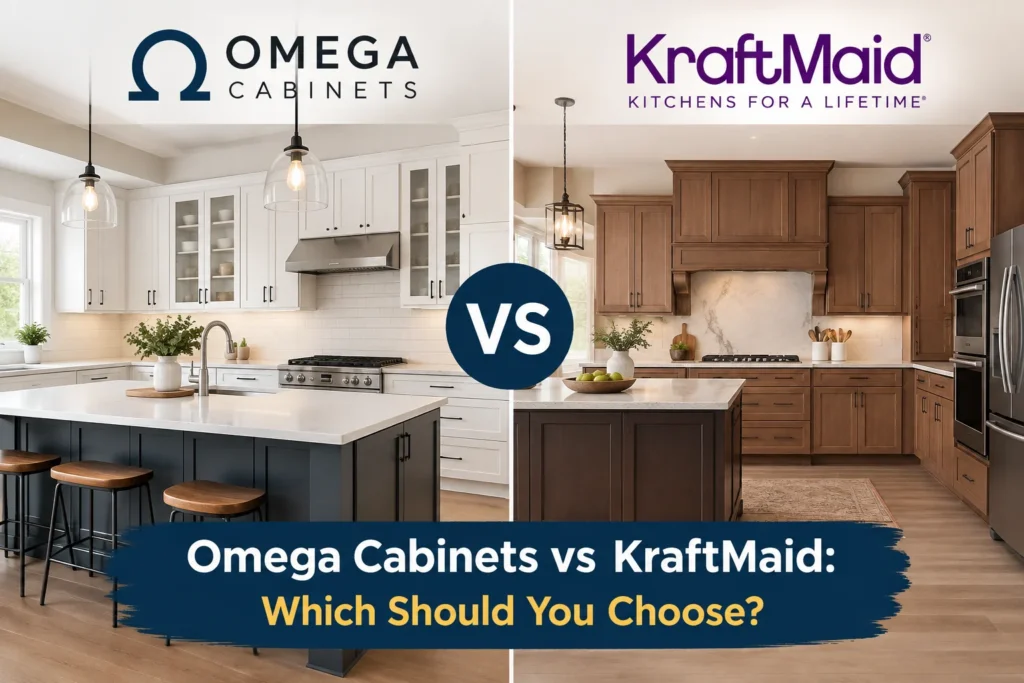
If you’re remodeling a kitchen, these two names come up constantly, and for good reason: both are established, well-reviewed brands sold through dealers, home centers, and design showrooms across the country. But they’re built for different budgets and different levels of customization, and picking the wrong one can mean overpaying for flexibility you didn’t need or under-buying and regretting it later.
Here’s the short version before we get into specifics: Omega leans toward semi-custom and full-custom cabinetry with more design flexibility and a higher price tag. KraftMaid is a semi-custom line built for wide availability, faster delivery, and a gentler price point. One interesting wrinkle worth knowing upfront: both brands are owned by the same parent company, MasterBrand Cabinets (KraftMaid’s manufacturing entity operates as Cabinetworks Group), so you’re really choosing between two product tiers from the same corporate family rather than two unrelated competitors.
Quick Comparison
| Factor | Omega Cabinets | KraftMaid |
|---|---|---|
| Founded | 1977, Waterloo, Iowa | 1969, Ohio |
| Parent company | MasterBrand Cabinets | Cabinetworks Group |
| Construction | Semi-custom to full-custom; framed and frameless (Full Access line) | Semi-custom; framed construction, plywood upgrade available |
| Door styles | 300+ | 500+ |
| Typical lead time | 6-9 weeks | 4-7 weeks |
| Price tier | Higher, premium | Mid-range, accessible |
| Warranty | Limited lifetime, original purchaser | Limited lifetime, original purchaser |
| Where to buy | Dealers and designers | Dealers, Home Depot, Lowe’s |
Company Background
Omega Cabinetry started in Washburn, Iowa, in 1977 and became part of MasterBrand Cabinets in 2002. It’s positioned as a near-custom to full-custom wood cabinet line, manufactured out of plants in Iowa and Tennessee.
KraftMaid has been around since 1969 and has grown into one of the most widely installed cabinet brands in the U.S., largely because it’s stocked at both The Home Depot and Lowe’s in addition to independent dealers. That retail footprint is a big part of why it’s often the first brand homeowners encounter.
Construction and Materials
Both brands build with real wood components and stand behind their work with quality testing, but the tiers differ.
Omega cabinets are typically all-wood construction, and the brand’s Full Access line adds frameless cabinet boxes, which open up more usable interior storage and give cabinetry a cleaner, more contemporary look. Depending on the product line you choose, Omega can move from semi-custom into genuinely full-custom territory, meaning near-any size, configuration, or finish combination is possible.
KraftMaid’s core line uses framed construction with 3/4-inch solid wood dovetail drawers and adjustable shelving as standard. Homeowners who want a step up in structural rigidity can order the KraftMaid Vantage line, which upgrades to all-plywood boxes. KraftMaid also runs its hardware through durability testing well beyond typical industry benchmarks, with hinges and slides rated for tens of thousands of open-close cycles.
Customization and Style Options
This is where the two brands diverge most.
Omega offers a genuinely broader customization path. Certain product lines let you specify custom sizes and configurations that go beyond a standard catalog, plus access to frameless construction through Full Access. The tradeoff is a smaller base style catalog, with roughly 300-plus door styles available in maple, oak, hickory, and laminate.
KraftMaid sticks to semi-custom, but its catalog is deep: over 500 door styles and finish combinations, a 14-step finishing process, and a wide range of storage inserts and organizational accessories. If you want an enormous menu of options without paying for full-custom manufacturing, KraftMaid covers more ground here.
Price and Value
Omega is the pricier of the two. Multiple dealer and reviewer estimates put it noticeably above KraftMaid, sometimes by 30-50%, depending on wood species, finish, and how much customization you’re asking for. That premium buys you more construction flexibility and, on higher-end lines, hand-applied finishing detail.
KraftMaid is built to hit a broader range of budgets. You can still upgrade materials and finishes, but the baseline cost of entry is lower, which is a big reason it’s the default recommendation for value-focused remodels.
Neither brand publishes fixed pricing online. Actual cost depends on your layout, wood species, door style, and local dealer markup, so get a quote from a local design showroom before assuming either brand fits (or busts) your budget.
Lead Times
If your timeline is tight, this matters as much as price. Omega’s more customized manufacturing process generally runs 6 to 9 weeks from order to delivery, sometimes longer depending on material availability. KraftMaid typically ships in 4 to 7 weeks, which is one reason it’s the more common pick for renovations working around a hard move-in date.
Warranty
Both brands back their cabinetry with a limited lifetime warranty to the original purchaser, covering manufacturing defects in materials and workmanship. KraftMaid’s budget-tier lines (Simplicity at Home Depot, Momentum at Lowe’s) step down to a 25-year limited warranty instead of lifetime coverage, so if warranty length matters to you, confirm which specific product line you’re being quoted. Neither warranty covers labor to remove or reinstall cabinets, normal wood aging or color variation, or damage from improper installation.
Availability
KraftMaid is easier to walk into and see in person. It’s sold through The Home Depot, Lowe’s, and a network of independent dealers, so most homeowners can get hands-on with samples within a short drive.
Omega is sold primarily through independent dealers and design showrooms rather than big-box retail, which usually means more one-on-one design support but also a bit more legwork to find a dealer near you.
Which One Should You Choose?
If your priority is faster delivery, a lower starting price, and an easy place to see samples in person, KraftMaid is the more practical choice for most kitchen remodels. If you need genuinely custom sizing or frameless construction, or you’re building a kitchen where standard cabinet dimensions won’t work (an awkward layout, a specific design vision, or tight design tolerances), Omega’s added flexibility is worth the extra cost and wait.
Either way, get an in-person quote before deciding. Door style availability, finish options, and pricing all vary by region and dealer, and a local showroom will give you a far more accurate picture than any brand comparison can.








1 thought on “Omega Cabinets vs KraftMaid: Which Should You Choose?”