What Is a Sadistic Person? A Plain-English Explanation
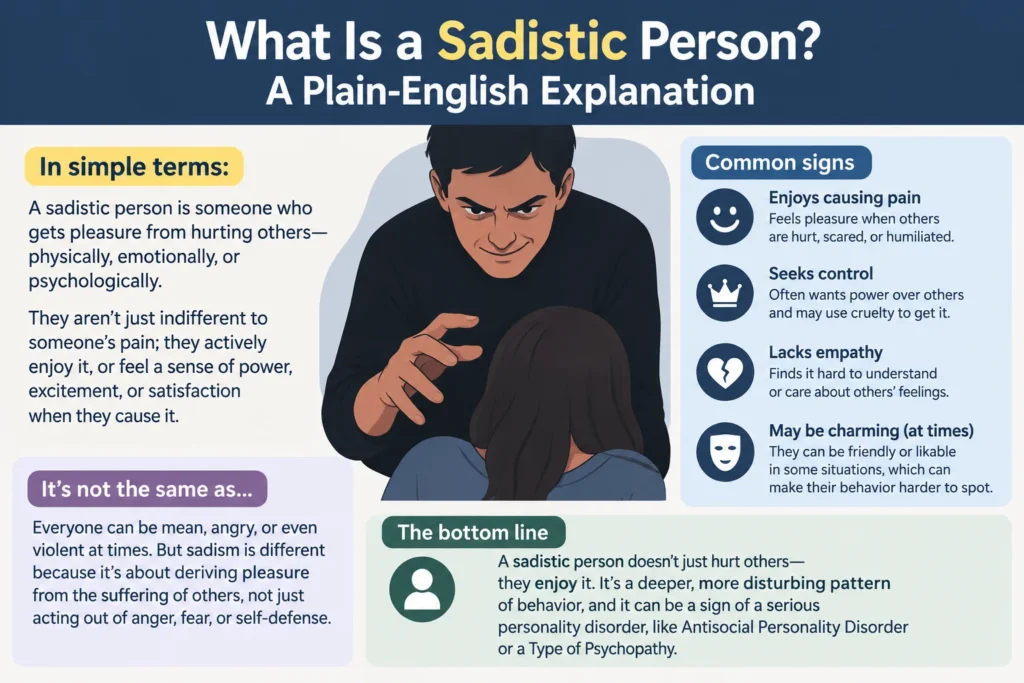
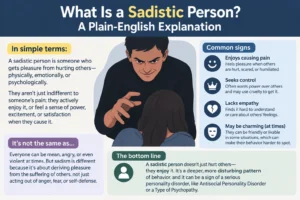
A sadistic person gets pleasure, satisfaction, or a feeling of power from someone else’s pain or humiliation. That’s the short answer. The longer one is more interesting, because this trait runs along a spectrum. At one end you’ll find people who enjoy a cruel joke a little too much. At the other sits a rare clinical pattern. Most folks fall somewhere in between, and knowing where helps you respond sensibly.
What Does Sadistic Mean?
The term traces back to the Marquis de Sade, an 18th-century French writer famous for stories built around cruelty. Psychologists now use it to describe enjoyment drawn from causing suffering, physical or emotional.
The enjoyment is the key piece. Someone who snaps at a coworker out of stress isn’t necessarily cruel-minded. A dentist who causes brief pain to fix a tooth certainly isn’t. What sets this trait apart is that the suffering itself is the reward.
Common Traits and Warning Signs
No checklist can diagnose anyone, but these patterns show up often:
- Seems energized or amused when others are embarrassed or hurt
- Targets people who can’t easily fight back
- Humiliates others, then says, “Relax, it’s just a joke.”
- Shows little guilt afterward
- Pays unusual attention to violence or suffering, in person or online
- Cruelty looks planned, not accidental
One red flag alone means little. A cluster that repeats over months tells a different story.
Everyday Sadism vs. Clinical Sadism
Researchers who study the “Dark Tetrad” (sadism, psychopathy, narcissism, and Machiavellianism) describe something called everyday sadism. Think online trolls, bullies, or people who quietly enjoy a rival’s failure. It’s unpleasant, but it’s common enough that plenty of ordinary people score somewhere on the scale.
Clinical territory is narrower. Sexual sadism disorder appears in the DSM-5-TR, but only when urges cause real distress or involve people who haven’t consented. Sadistic personality disorder was once proposed in older editions of the manual, yet it isn’t an official diagnosis today. So “sadistic” is mostly a descriptive word, not a medical label.
Sadism Is Not the Same as BDSM
People mix these up constantly. Consensual BDSM runs on agreement, clear limits, and safewords. Everyone involved chooses it and can stop it. Harmful cruelty has none of that. Consent is the dividing line, and it matters a lot.
Why Do Some People Turn Out This Way?
Honestly, nobody has a single answer. Studies point to a mix of temperament, low empathy, and harsh or abusive early environments. I wouldn’t trust anyone who claims to know the exact recipe, because the science is still unsettled.
What to Do If You’re Dealing With One
Don’t try to win arguments with someone who feeds on your reaction. Set firm boundaries, keep records of harassment, and limit contact where you can. If you feel unsafe, leave and call 911. The National Domestic Violence Hotline (1-800-799-7233) helps with controlling or abusive relationships. And if you recognize these urges in yourself, a licensed therapist is a solid first step.