
What Is a Single-Minded Proposition, and Why Does It Matter?
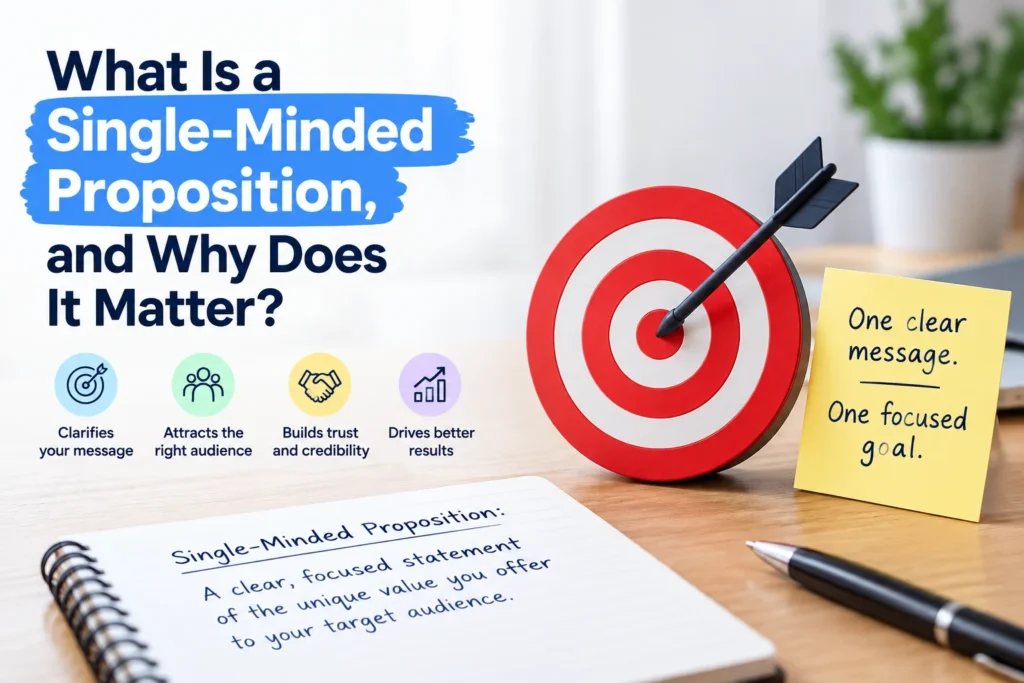
Every great ad starts with one sentence nobody outside the agency ever sees. Marketers call it a single-minded proposition, or SMP: the single most important thing a brand wants a customer to believe. It’s the line buried in the creative brief that everything else, the headline, the visuals, and the media plan, has to serve.
That word “single” is doing a lot of work. Not three benefits. Not a paragraph of reasons to believe. One idea, stated so plainly, a stranger could repeat back to you.
The Idea Behind It
A single-minded proposition names the one benefit a product should own in the customer’s mind. It’s not a tagline, though sometimes the two end up looking similar. Nike’s “Just Do It” reportedly grew out of exactly this kind of brief.
The classic example is the original iPod launch. Every competitor at the time listed specs: memory, price, compatibility, and battery life. Apple picked one thing and said it clearly: “1,000 songs in your pocket.” As marketing commentator Tom Fishburne has pointed out, that one line cut through a market where every other MP3 player was piling on specs and features at once.
Domino’s did something similar decades earlier with its delivery guarantee. One promise, easy to picture, easy to remember.
Why Marketers Keep Coming Back to It
Here’s the thing: writing a single-minded proposition is genuinely hard, and it gets harder the bigger the team in the room. Everyone has a favorite feature. Everyone wants their piece included. Brand strategist Giles Lury has noted that some well-known lines break the “single” rule outright, stacking three benefits into one proposition, like Mars’s “helps you work, rest, and play.” It works occasionally, but it’s the exception, not the model to copy.
The more common failure looks different. A brief goes through five rounds of internal review, and each round adds a clause. What started as one clear idea ends up as an 80-word sentence stitched together with commas and “ands.” By the time it reaches the creative team, there’s nothing single-minded left to work with.
That’s really the whole argument for keeping it narrow. A crowded proposition asks an audience to hold five thoughts at once. A single-minded one asks for just one, and one is a lot easier to remember on a Tuesday afternoon while scrolling past forty other ads.
How to Actually Write One
A few things tend to separate a working SMP from a mushy one:
- Pick the benefit that matters most, not all of them. If three features seem equally important, that’s a sign the strategy work isn’t finished yet.
- Write it the way a person would say it out loud. Jargon is a warning sign. If it sounds like it belongs in a boardroom, it probably won’t survive contact with a customer.
- Test it by cutting words. Can you lose half the sentence and keep the meaning? If yes, cut it.
- Separate the proposition from the tagline. The SMP is a strategic statement for the team. It doesn’t need to be clever. It needs to be true and specific.
- Fight for it in the room. The version that survives committee review is rarely the sharpest one. Someone has to protect the single idea against well-meaning additions.
None of this is about being clever. It’s about restraint, and restraint is a much harder sell internally than most people expect.








1 thought on “What Is a Single-Minded Proposition, and Why Does It Matter?”