
CTP Certification: What It Is and How to Get One
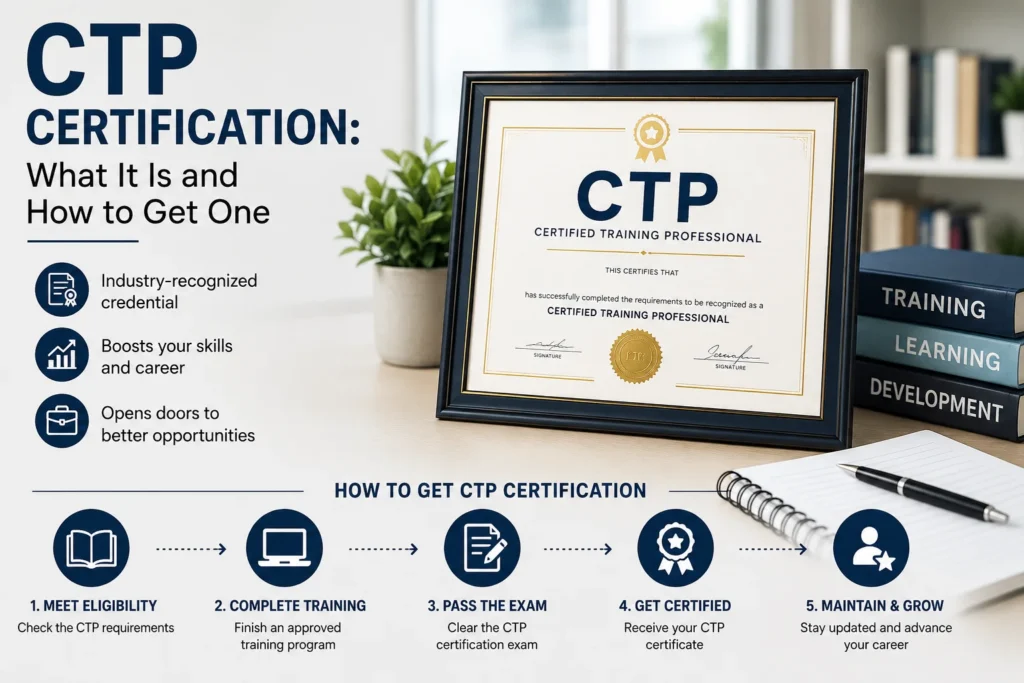
If you work in corporate finance and keep running into the letters “CTP” after someone’s name, you’re not imagining things. It’s one of the most respected credentials in treasury management, and it shows up constantly in job postings for cash management, liquidity, and corporate finance roles. Here’s what it actually takes to earn it.
What Is the CTP Certification?
CTP stands for Certified Treasury Professional. It’s a credential awarded by the Association for Financial Professionals (AFP), a Bethesda, Maryland-based organization that sets standards for the treasury and finance industry. More than 30,000 people currently hold this certification, and it’s widely recognized across the U.S. and internationally as proof that someone understands corporate liquidity, capital management, and treasury operations at a professional level.
Unlike a general finance degree, the CTP is built specifically around the day-to-day realities of treasury work: managing a company’s cash position, forecasting receipts and disbursements, structuring capital, and evaluating financial risk. Employers treat it as a signal that a candidate already knows the job, not just the theory behind it.
There’s also a related credential worth knowing about: the CTPA, or Certified Treasury Professional Associate, which is designed for full-time students who want to start building treasury credentials before they’ve accumulated work experience.
Who This Certification Is For
The CTP tends to attract a specific group of professionals:
- Treasury analysts and managers looking to formalize their expertise
- Corporate finance professionals moving into cash and liquidity management
- Accounts payable/receivable or FP&A staff aiming to pivot into treasury
- Banking professionals who work closely with corporate treasury clients
If your job touches cash forecasting, working capital, bank relationships, or corporate risk management, this certification is likely to come up as a career milestone at some point.
Eligibility Requirements
Before you can sit for the exam, you need to meet AFP’s experience and education criteria. At minimum, that means:
- Two years of full-time work experience in a career-based corporate cash/treasury management or corporate finance-related role. Internships, part-time work, and volunteer positions don’t count toward this.
- An advanced business degree from a graduate-level program can substitute for one year of that experience requirement, provided you submit an official transcript.
- College-level teaching experience in a related finance field can also count under certain conditions.
You’re allowed to register and start the exam process before you’ve fully met these requirements, but AFP won’t award the actual credential until everything checks out. Applications stay valid for six consecutive testing windows, so there’s some breathing room, but not unlimited time.
What’s on the CTP Exam?
The exam itself is a single, comprehensive test: 170 multiple-choice questions, 20 of which are unscored pilot questions that don’t count toward your final score. You get 3.5 hours to complete it, with no scheduled breaks (though you can step away if needed).
The content is organized around a handful of core domains, generally covering:
- Maintaining corporate liquidity: Cash positioning, short-term investing and borrowing, forecasting cash receipts and disbursements
- Managing capital structure: Long-term capital costs, evaluating capital investments
- Managing risk: Corporate financial risk, including credit and counterparty exposure
- Treasury operations and technology: Payment systems, banking relationships, and the tools treasury teams rely on
- Corporate governance and ethics as they apply to treasury decision-making
To pass, you need a scaled score of 300 or higher. If you don’t pass on your first attempt, you can retake the exam during the next available testing window, though not more than once per window.
Most candidates study from AFP’s official textbook, Essentials of Treasury Management, along with AFP’s own exam prep platform, which includes practice questions and study modules built around the actual test blueprint.
How to Apply and Register
The process runs in a few clear stages:
- Submit your application, including the Report of Experience and/or Education form, documenting your qualifying work history.
- Wait for approval. Once your application clears, you’ll receive an Authorization to Test.
- Schedule your exam at a Pearson VUE testing center. There are thousands of these across the U.S. and Canada, so location usually isn’t a barrier.
- Take the exam during your assigned testing window.
- Get your results. If you pass, a physical certificate typically arrives four to six weeks later.
AFP runs exam windows twice a year, so timing your application matters if you’re aiming for a specific test date.
What It Costs
Pricing depends on whether you’re an AFP member and how early you register. Rates change from year to year, but as a rough guide, early registration for members tends to run in the $900-$1,000 range, while non-member pricing is noticeably higher, often several hundred dollars more. Registering after the standard deadline adds an additional fee on top of that. Because these numbers shift, it’s worth checking AFP’s official deadlines and fees page directly before you budget for the exam.
A few things can help offset the cost: some employers cover certification expenses as part of professional development budgets, AFP offers a scholarship program aimed at early-career professionals from underrepresented backgrounds, and certain employer education assistance programs or 529 plans may apply to qualified certification expenses.
Maintaining the Credential
Passing the exam isn’t the end of the story. CTP holders need to earn and report 36 continuing education credits every three years to keep the certification active. This keeps the credential tied to current practice rather than a one-time test result, and it’s part of why employers tend to trust it: a CTP on staff means someone whose knowledge is required to stay current.
Certified professionals also agree to follow the CTP Standards of ethical conduct as a condition of keeping the credential.
Why Bother Getting Certified?
Beyond the resume line, there are a few concrete reasons professionals pursue this certification:
- Career mobility. It signals readiness for more senior treasury and finance roles, and many job postings in this field list it as a preferred or required qualification.
- Credibility with stakeholders. Whether you’re presenting to leadership or negotiating with banking partners, the credential carries weight in the room.
- Salary potential. Certified professionals in this field frequently report earning more than uncertified peers doing similar work, though the exact premium varies by industry, region, and experience level.
- A defined body of knowledge. Even for experienced professionals, studying for the exam tends to fill in gaps around areas of treasury that a given job might not touch directly, like international cash management or capital structure decisions.