
Black vs. Red Grapes: Which One Should You Actually Buy?
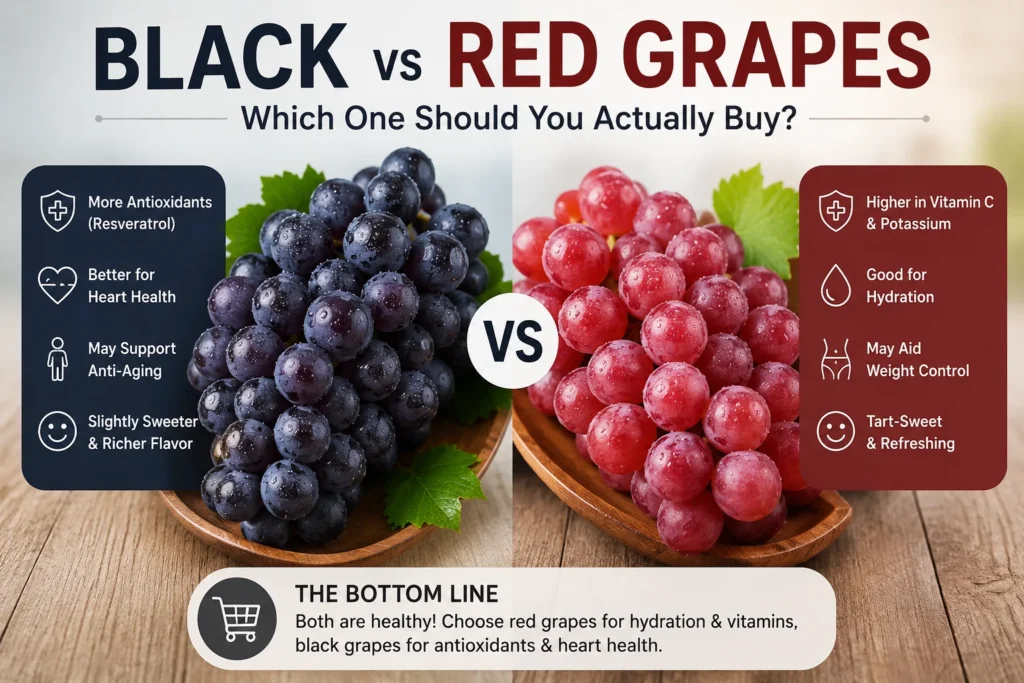
Standing in the produce aisle, most people grab whichever grape bag looks freshest and move on. But black and red grapes aren’t identical twins wearing different colored shirts. They come from different varieties, carry different antioxidant loads, and taste noticeably different once you actually compare them side by side.
Here’s the short answer: Black grapes generally pack more antioxidants and a deeper, sweeter flavor, while red grapes offer a lighter, tarter bite with nearly identical calories and carbs. Neither one is “bad” for you. The right pick depends on what you’re after, whether that’s maximum polyphenols, a snack your kids won’t complain about, or the right grape for a cheese board.
Taste and Texture: The First Real Difference
Red grapes tend to lean tart with a crisp snap, especially varieties like Flame Seedless or Red Globe. Black grapes, such as Concord or Autumn Royal, usually taste sweeter and softer, with a slightly jammier texture when fully ripe.
If you’ve ever bitten into a red grape expecting candy-level sweetness and gotten a pucker instead, that’s the tannin and acid content talking. Black grapes skip most of that sharpness, which is part of why they’re the go-to choice for juice, jam, and wine production.
Nutrition Facts: Black Grapes vs Red Grapes
Per 3/4-cup serving (about 100g), the two are nearly identical on the basics:
| Nutrient | Black Grapes | Red Grapes |
|---|---|---|
| Calories | ~90 | ~90 |
| Carbohydrates | ~23-24g | ~23g |
| Fiber | ~1g | ~1g |
| Potassium | ~240mg | ~230mg |
| Vitamin C | Good source | Good source |
| Protein/Fat | Negligible | Negligible |
Calorie and carb counts barely move between the two, so if you’re tracking macros, it genuinely doesn’t matter which color ends up in your bowl.
Where They Actually Diverge: Antioxidants
This is where black grapes pull ahead. A UK retail survey published on the National Center for Biotechnology Information (NCBI) database compared white, red, and black table grapes and found black grapes had roughly 180% higher total antioxidant activity and about 60% more total phenolic content than white grapes, with red grapes falling in between the two. Anthocyanin levels, the pigment compounds tied to antioxidant power, were around 40 times higher in black grapes than in white grapes.
Anthocyanins are the pigments responsible for that deep purple-black skin color, and they’re doing more than making the fruit look pretty. These compounds are linked to reduced inflammation and cell protection. Resveratrol, another antioxidant found in both grape types (and famous for its association with red wine), shows up in higher concentrations in darker-skinned grapes too.
So if antioxidant density is your priority, black grapes win this round. Red grapes still bring plenty to the table, just at a lower concentration.
Health Benefits Worth Knowing
Both grape colors share a similar benefit profile, backed by decades of research:
Heart health. Reviews on grape polyphenols have connected regular grape consumption to lower cardiovascular risk, partly through resveratrol’s effect on blood vessel function and cholesterol.
Cancer protection. Whole grape extracts, particularly from black grapes, have shown protective effects against colon cancer in lab studies, though this research is still developing.
Blood sugar and digestion. The fiber and polyphenols in both varieties may support more stable blood sugar response compared to processed sugary snacks, despite grapes’ natural sugar content.
Skin and immune support. Vitamin C content in both types contributes to collagen production and immune function, with black grapes edging out red grapes slightly in some samples.
None of this means either grape is a superfood miracle cure. They’re a solid, low-effort way to add fiber, hydration (grapes are about 80% water), and plant compounds to your day.
Which Grape Should You Buy?
Pick black grapes if you want the highest antioxidant concentration, prefer a sweeter and softer bite, or are making juice, jam, or wine at home.
Pick red grapes if you like a crisper, tarter snack; you’re packing lunches for kids who find black grapes “too intense”; or you’re building a cheese board where a lighter grape balances richer flavors.
Pick both if you can’t decide. Mixing colors on a fruit platter also happens to look better than a single-color bowl, and you get the combined benefit range either way.
The Bottom Line
Black and red grapes are close enough nutritionally that you shouldn’t stress over picking the “correct” one. Black grapes carry a meaningful antioxidant edge and a sweeter profile. Red grapes bring a tarter crunch with nearly matching nutrition. Buy what tastes good to you, rotate between the two, and let the color debate stay in the produce aisle where it belongs.